


Coach Platforms
All rankings

Best community platform for coaches

What is the best community platform for coaches?

7 min read1,639 wordsChecked 22 September 2026

Community software is the category where the best product and the best answer diverge most sharply, and it depends entirely on what the community is for.

For most coaches it is a layer: somewhere clients have each other between sessions, somewhere people who cannot afford one-to-one can still be around you. For a smaller number it is the product itself, sold as a membership.

The criterion here — discussion that stays alive, with membership billing attached — splits those two, and the answer is different on each side of the split.

The short answer

Ranked by discussion that stays alive between sessions with membership billing attached, Coachful is first from $29 a month and we make it, with Skool and Circle at $99 running a better community outright. If the community is your product rather than a layer under coaching, buy the community product.

Best community platform for coaches
Photo by Tima Miroshnichenko on Pexels

Ranked by

Discussion that stays alive between sessions, with membership billing attached

A community nobody returns to is a cost. The measure is whether members come back unprompted.

Coachful logoCP 01-001CoachfulCoaching platformfrom $29/mo

Number one

Coachful

coaching platform · from $29/mo

Community attached to the programmes and clients it belongs to, rather than as a separate place to maintain.

Coachful client workspace, captured 22–23 September 2026
Coachful client workspace · captured 22–23 September 2026

The full ranking

Pricing verified May 2026

Two through 6

Skool & Circle logoCP 06-012Skool & CircleCommunity platform$49–99/moMighty Networks logoCP 06-023Mighty NetworksCommunity platform$95–215/mo + 1–2% of salesKajabi logoCP 03-014KajabiCourse & marketing platform$179–499/mo ($143–399 annual)GoCP 07-015GoHighLevelAgency marketing platform$97–497/mo + metered usageThinkific logoCP 03-026ThinkificCourse platform$49–199/mo, 0% platform fee

2. Skool & Circle

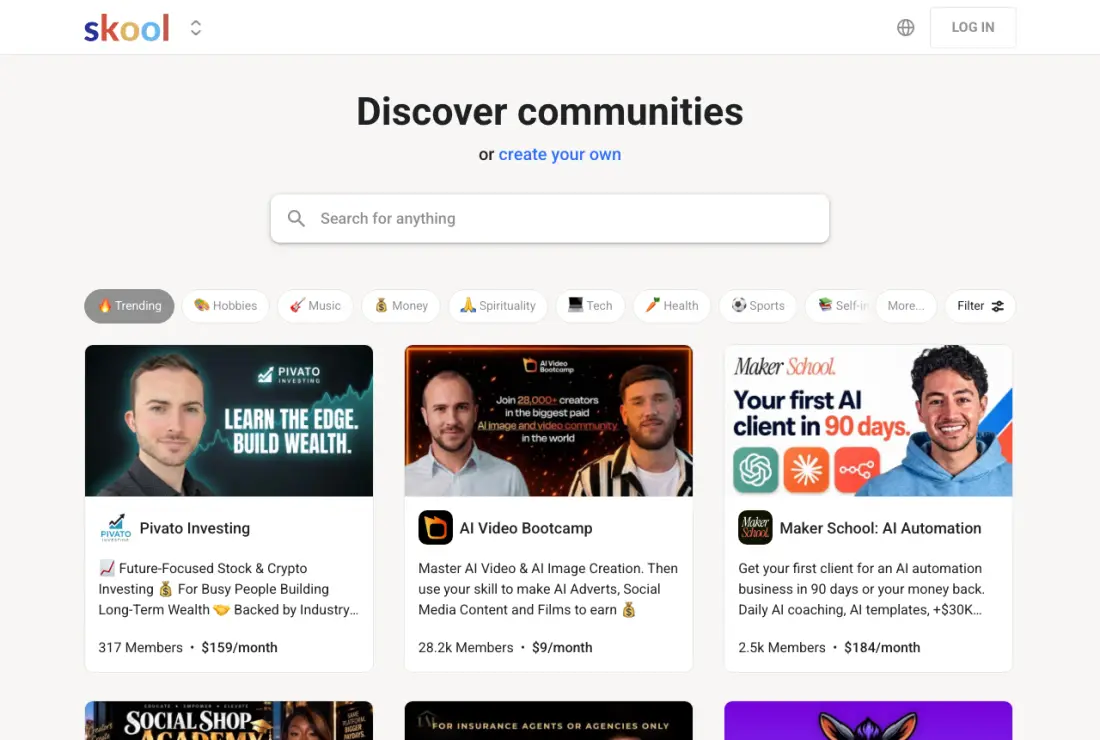
Skool & Circle home page, captured 22–23 September 2026
Skool & Circle home page · captured 22–23 September 2026

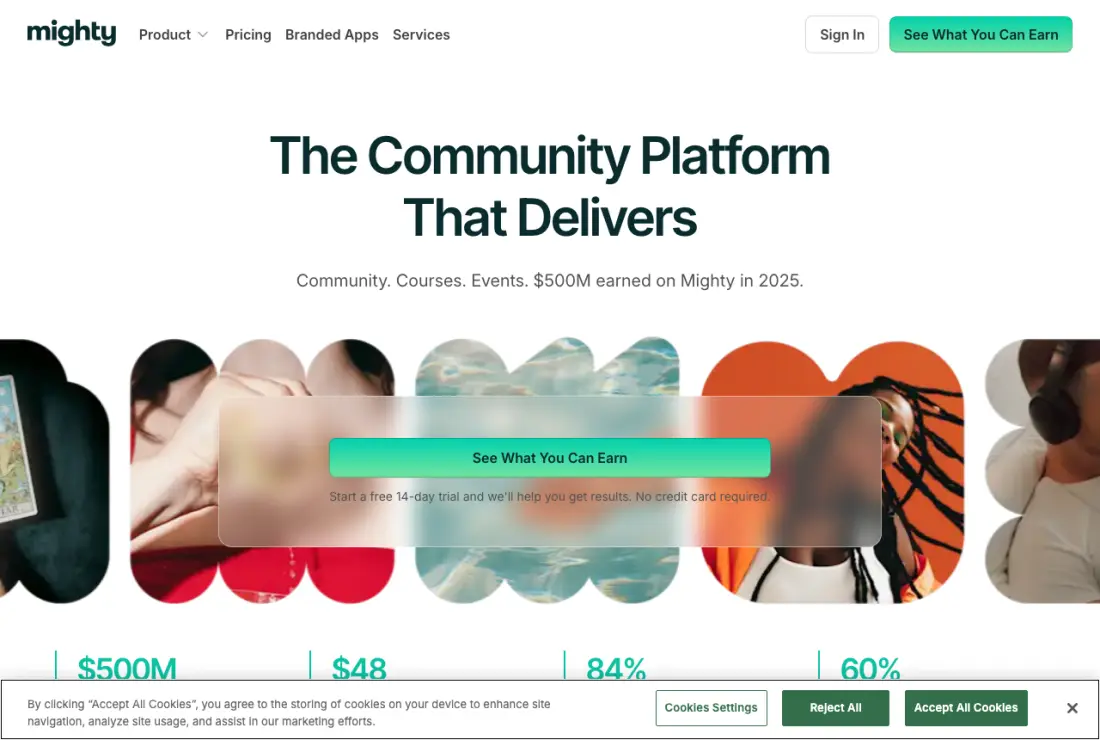
3. Mighty Networks

Mighty Networks home page, captured 22–23 September 2026
Mighty Networks home page · captured 22–23 September 2026

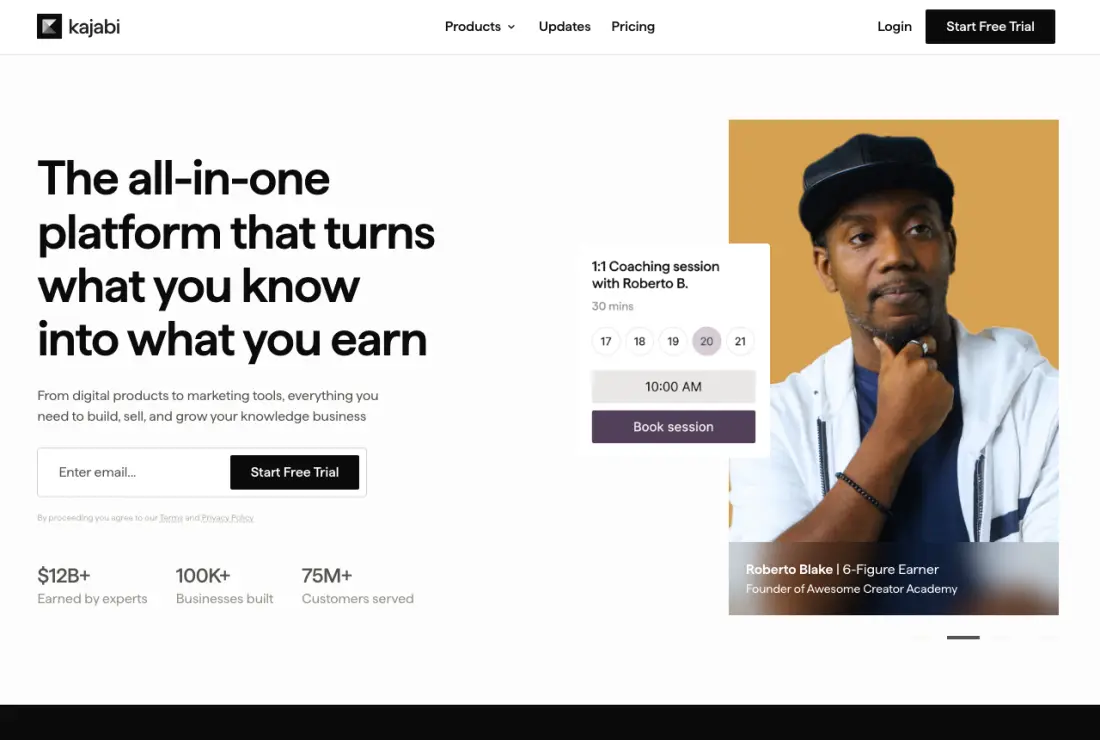
4. Kajabi

Kajabi home page, captured 22–23 September 2026
Kajabi home page · captured 22–23 September 2026

Every tool, in detail

1

Coachful

Coachful runs a community feed alongside cohorts, coaching programmes and membership billing, on the same client records as one-to-one work.

On the community experience alone, Skool and Circle are better than us. What Coachful supplies is the thing that keeps a coaching community from going quiet, which is a programme running through it.
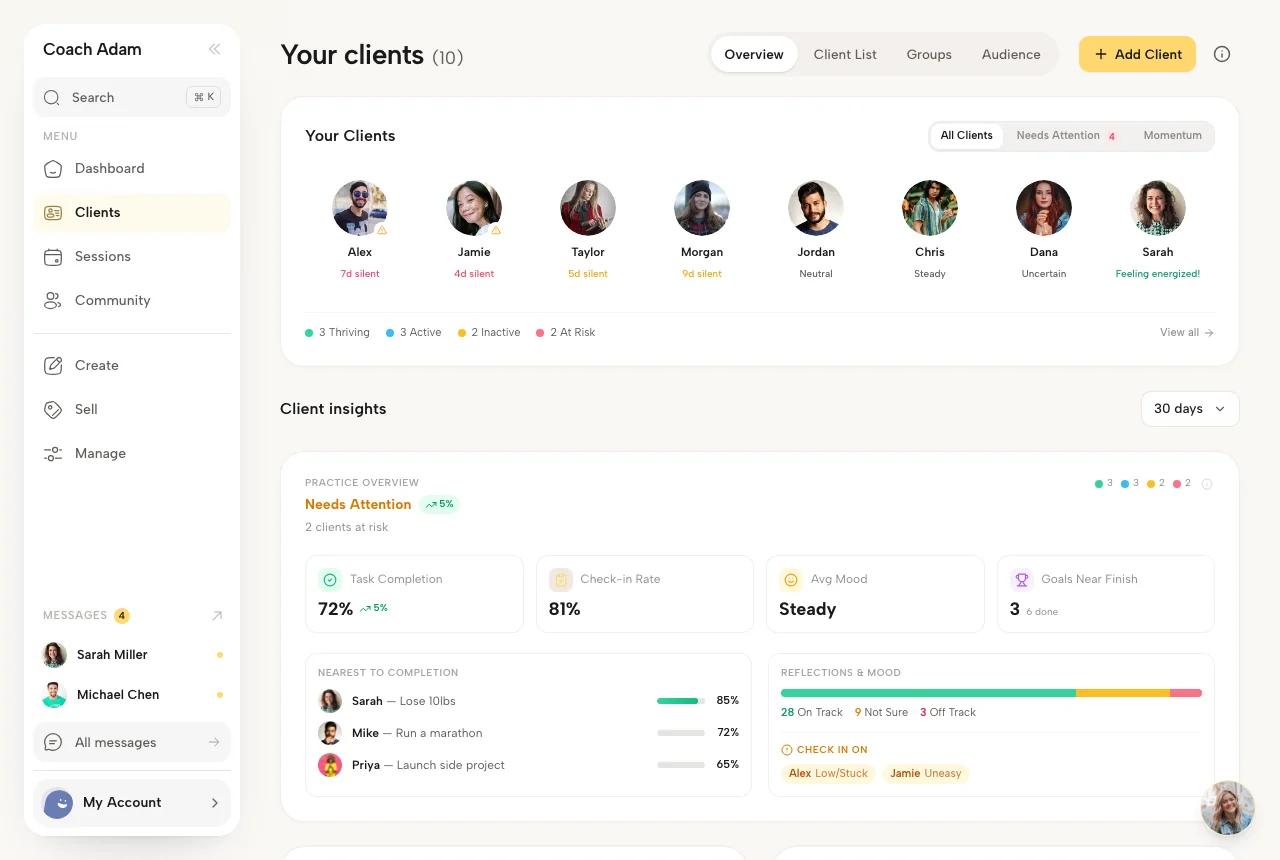
Coachful client workspace, captured 22–23 September 2026
Coachful client workspace · captured 22–23 September 2026

Best for

Coaches whose community supports the coaching rather than being the product.

Where it falls down

A dedicated community product has a better feed and stronger culture tooling.
2

Skool & Circle

Skool and Circle are the best community products in this comparison, and for a paid-community business they are the correct choice.

They ship no coaching programmes, no in-app video and no calendar sync, so every part of a coaching practice sits in a second system with a separate list.

Skool & Circle home page, captured 22–23 September 2026
Skool & Circle home page · captured 22–23 September 2026

Best for

Businesses where a paid community is the revenue.

Where it falls down

No coaching layer whatsoever, at the highest price in this group.

3

Mighty Networks

Mighty Networks binds community and cohorts more tightly than anything else here, with a branded mobile app that members genuinely use.

No scheduling and partial coaching programmes, so one-to-one work runs elsewhere.

Mighty Networks home page, captured 22–23 September 2026
Mighty Networks home page · captured 22–23 September 2026

Best for

Community-led practices delivering through cohorts.

Where it falls down

No scheduling, partial coaching programmes.

4

Kajabi

Kajabi includes a community module, which for an existing customer avoids a separate subscription and keeps members alongside course buyers.

The community is a module rather than the focus, and live group work is weaker than either a dedicated community product or a cohort-shaped coaching platform.

Kajabi home page, captured 22–23 September 2026
Kajabi home page · captured 22–23 September 2026

Best for

Existing Kajabi customers who want a community without a new subscription.

Where it falls down

A module rather than a focus, and weaker live group work.

5

GoHighLevel

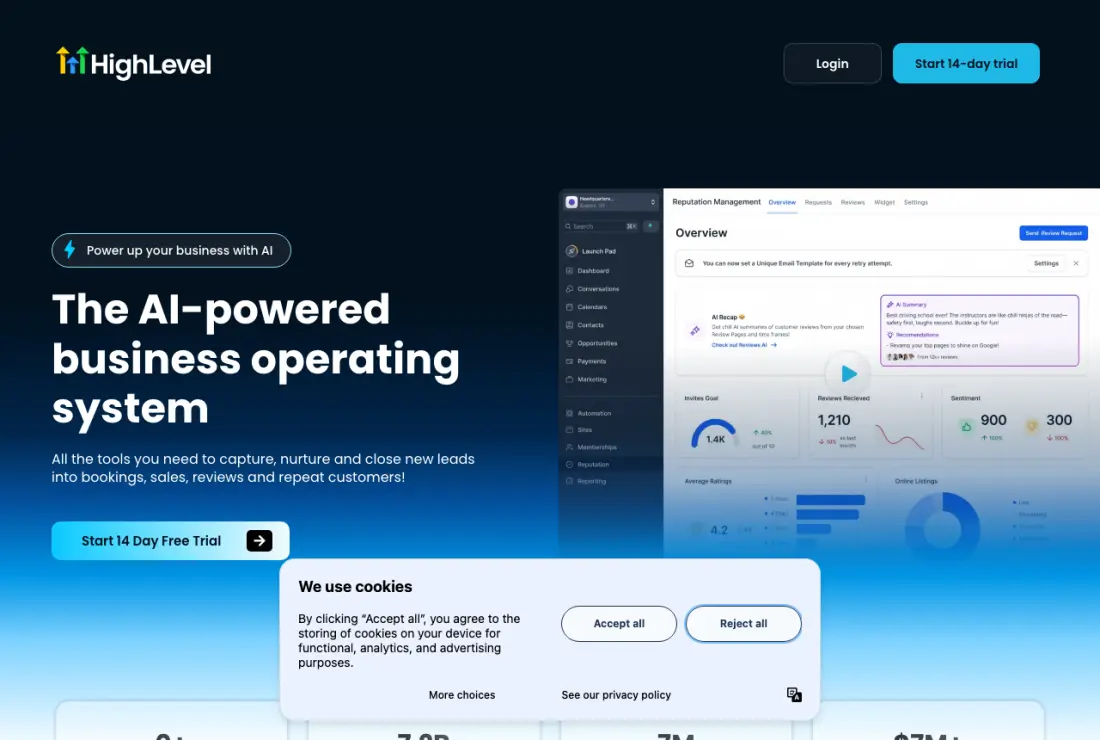
GoHighLevel includes basic community functionality alongside its marketing stack, which for an agency running memberships is convenient.

It has no coaching layer, and the community features are the weakest here, so it appears for completeness rather than as a recommendation.

GoHighLevel home page, captured 22–23 September 2026
GoHighLevel home page · captured 22–23 September 2026

Best for

Agencies running memberships alongside marketing operations.

Where it falls down

The weakest community features here, and no coaching layer.

6

Thinkific

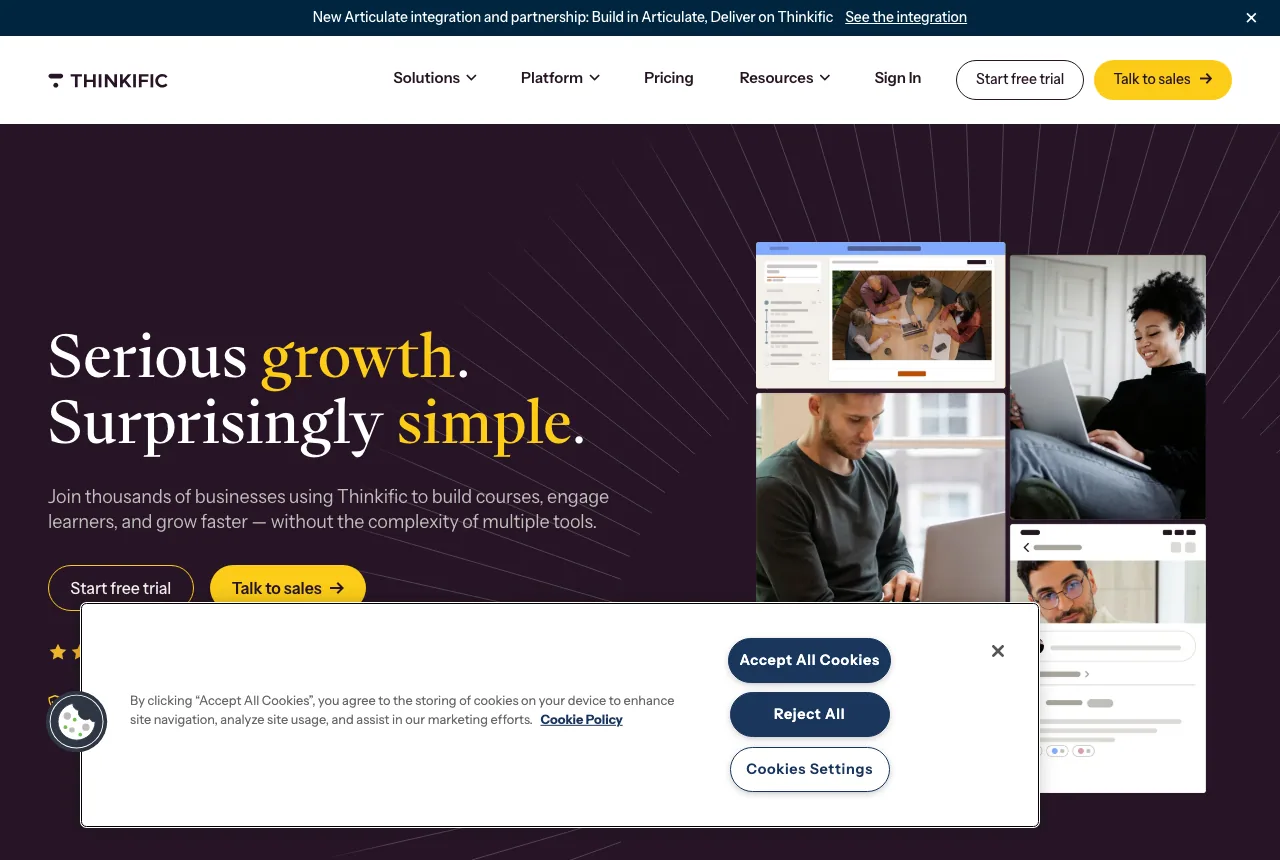
Thinkific attaches community to courses, which works well when the discussion is about material people are working through.

It is the least community-led product in this group, and coaching programmes are partial.

Thinkific home page, captured 22–23 September 2026
Thinkific home page · captured 22–23 September 2026

Best for

Course businesses where discussion supports the material.

Where it falls down

Community attached to courses rather than existing in its own right.

What keeps a coaching community alive

Communities do not die from bad software. They die from nobody having a reason to post, and the reason is almost always something happening elsewhere.

A cohort running through it. A group programme gives twelve people a shared reason to be there this week. A community with no programme attached is a room of strangers.

The coach present. Not moderating — participating. A community where the coach appears fortnightly is a community members visit fortnightly.

Members connected to each other rather than to you. This is what makes a community survive a quiet month. It is also the hardest part to engineer and the slowest to arrive.

Software affects the first of those and barely touches the other two, which is worth knowing before choosing on features.

Community against what supports it

ProductPriceCommunityMembership billingCohortsCoaching layer
Coachfuloursfrom $29YesYesYesFull
Skool & Circle$99Best hereYesLimitedNone
Mighty Networks$41StrongYesBest herePartial
Kajabi$179A moduleYesPartialPartial
GoHighLevel$97BasicYesNoNone
Thinkific$49Course-attachedYesYesPartial

Comparison registry, verified May 2026. Skool and Circle are recorded as shipping no coaching programmes, no in-app video and no calendar sync.

An online coaching community
Photo by Matheus Bertelli on Pexels
Communities die from nobody having a reason to post, and the reason is nearly always a programme happening alongside it.

Free community or paid membership, which are different businesses

A free community converts 3 to 8% of active members into paying clients and doubles as a content engine and continuous market research. It costs attention rather than money and it has no churn problem, because nobody is paying.

A paid membership is a product with its own economics: $47 to $197 a month, 5 to 10% monthly churn, and around 40% of members still active at six months. A two-hundred-member community needs ten to twenty new members every month simply to stay the same size.

The second is a real business and a permanent marketing commitment. Coaches who launch one expecting recurring revenue without recurring acquisition discover the compounding around month fourteen rather than at launch.

Membership arithmetic

5–10%Monthly churn on a paid coaching community
~40%Of members still active at six months
10–20New members a month needed to hold 200 steady
3–8%Of a free community who convert to paying clients

What to run instead, if you will not show up

A community requires the coach to be present, and a coach who appears fortnightly has a community members visit fortnightly. That is not a software problem and no product solves it.

If you will not show up consistently, the honest alternatives are better. A cohort gives twelve people a shared reason to be somewhere for twelve weeks and then ends cleanly, with no churn to manage.

An email list keeps an audience warm with no expectation of live presence and is the one marketing asset nobody can take away.

Office hours — a recurring open call — produce much of a community’s value with a defined commitment rather than an unbounded one.

A quiet community is worse than no community, because it is visible evidence of something that stopped.

Common questions

What is the best community platform for coaches?

Skool and Circle run the best communities at $99 a month. Coachful is first on this list because the criterion includes the coaching that keeps a community alive, and we make it. If the community is your product, buy Skool or Circle.

Does Skool include coaching features?

No. The registry records no coaching programmes, no in-app video and no calendar sync. It is a community product, so a coaching practice alongside it is a second system with a second list.

Why do coaching communities go quiet?

Because nobody has a reason to post. A cohort running through the community gives twelve people a shared reason this week; a community with no programme attached is a room of strangers waiting for the coach.

What is a normal churn rate on a coaching membership?

5 to 10% monthly, and around 40% of members are still active at six months. A two-hundred-member community needs ten to twenty new members every month simply to stay the same size.

Should the community be free or paid?

A free community converts 3 to 8% of active members into paying clients and doubles as a content engine. A paid one is a product with its own churn and marketing requirement. They are different businesses.

Should my coaching community be free or paid?

A free community converts 3 to 8% of active members into clients and doubles as content and research. A paid membership is a separate product with 5 to 10% monthly churn and a permanent marketing requirement. They are different businesses.

How long does a coaching membership take to be viable?

Usually two to three years to reach a hundred-plus members, because churn compounds against you the entire time. The launch is the easy part; month fourteen is the test.

What if I do not want to run a community?

Run a cohort instead, which ends cleanly and has no churn, or recurring office hours, which produce much of the same value with a defined commitment. A quiet community is worse than none because it is visible evidence of something that stopped.

The verdict

If the community is your product, Skool or Circle. They are better at it than we are and the coaching half can run elsewhere.

If the community exists so that clients have each other and the next coaching conversation is easier — which is the more common case — then one client list matters more than a better feed, and that is what Coachful is for from $29 a month.

How to disagree with this

The criterion is the whole argument. If breadth is not what you need, this order is irrelevant to you and a different list will serve you better. That is why there are several, each ordered by something different.

For a version of the same products with no ordering at all, the alphabetical directory lists every one of them and picks nothing.

Published by Coachful, which makes one of the products ranked here. No affiliate links and no paid placement.

Other rankings