



Coach Platforms
All rankings

Best for scaling a coaching business

What platform scales with a growing coaching practice?

7 min read1,623 wordsChecked 22 September 2026

Scaling a coaching practice does not mean more clients. A sustainable one-to-one book tops out at ten to fifteen people, and past that the preparation, notes and mental load degrade the work itself.

So scaling means adding something that is not another one-to-one client: a group programme, a second offer type, or a second coach. 94% of coaches above $100,000 have done exactly that.

The criterion is therefore whether the product survives that change, or whether the moment the practice starts working is also the moment you have to migrate everything.

The short answer

Ranked by whether the tool still fits once you add group programmes, a team and a second offer, Coachful is first from $29 a month and we make it, with Kajabi at $179 scaling content and GoHighLevel at $97 scaling marketing. A one-to-one book caps at ten to fifteen clients, so scaling always means changing what you sell.

Best for scaling a coaching business
Photo by Mikhail Nilov on Pexels

Ranked by

Whether the tool still fits once you add group programmes, a team and a second offer

Most coaches change tools at the point their practice starts working, which is the worst possible moment to migrate.

Coachful logoCP 01-001CoachfulCoaching platformfrom $29/mo

Number one

Coachful

coaching platform · from $29/mo

Group programmes, team seats and multiple offer types without changing system.

Coachful client workspace, captured 22–23 September 2026
Coachful client workspace · captured 22–23 September 2026

The full ranking

Pricing verified May 2026

Two through 6

Kajabi logoCP 03-012KajabiCourse & marketing platform$179–499/mo ($143–399 annual)GoCP 07-013GoHighLevelAgency marketing platform$97–497/mo + metered usageMighty Networks logoCP 06-024Mighty NetworksCommunity platform$95–215/mo + 1–2% of salesCoCP 02-025CoachAccountableCoaching admin tool$20–100/mo (by client count)HoneyBook logoCP 05-026HoneyBookClient management & CRM tool$36–129/mo

2. Kajabi

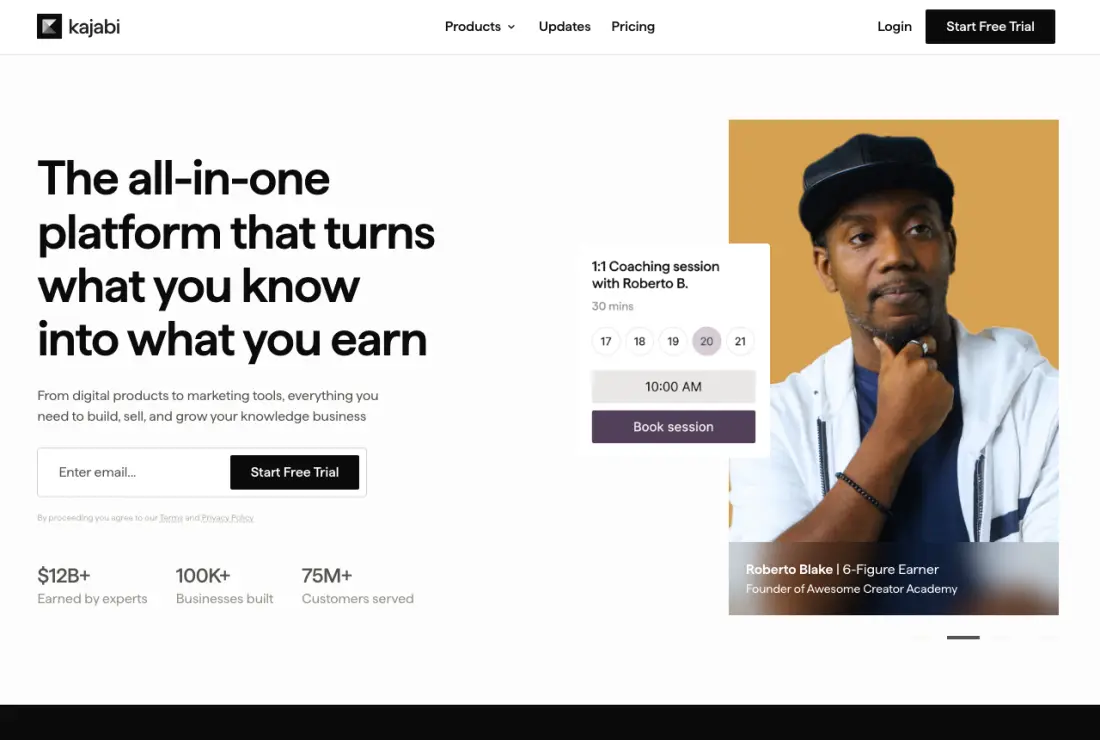
Kajabi home page, captured 22–23 September 2026
Kajabi home page · captured 22–23 September 2026

3. GoHighLevel

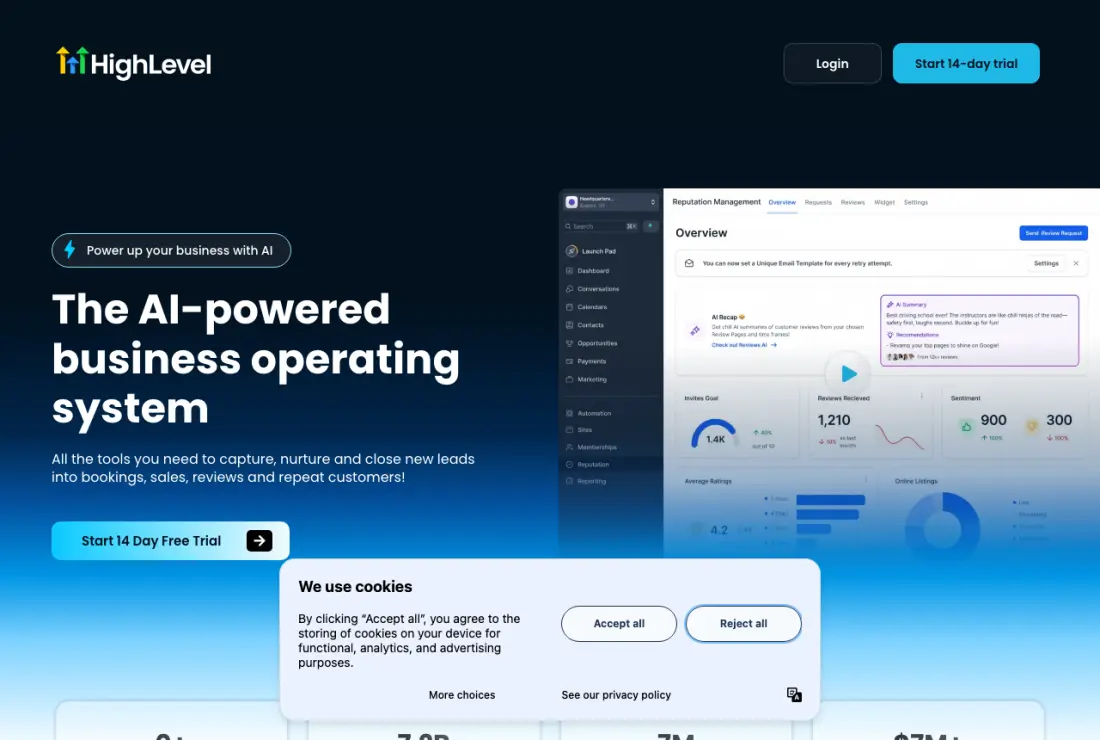
GoHighLevel home page, captured 22–23 September 2026
GoHighLevel home page · captured 22–23 September 2026

4. Mighty Networks

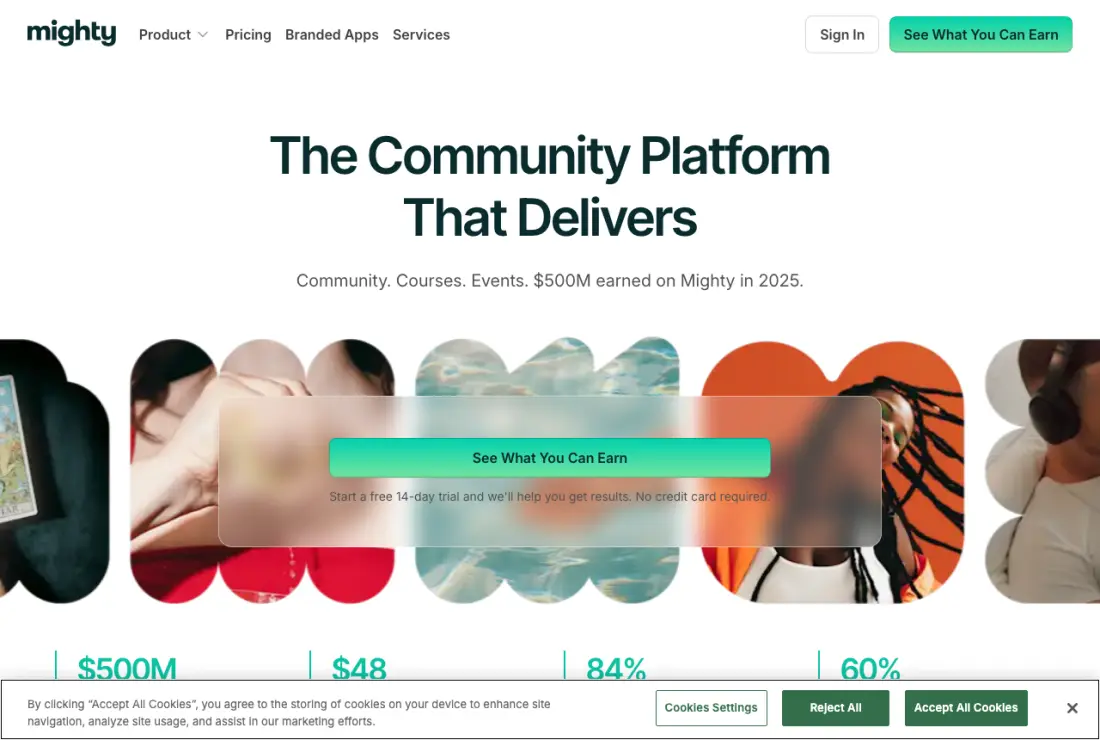
Mighty Networks home page, captured 22–23 September 2026
Mighty Networks home page · captured 22–23 September 2026

Every tool, in detail

1

Coachful

Coachful holds one-to-one work, group cohorts, courses, memberships and team seats on the same client list, which means adding a second offer is a change of plan rather than a change of system.

The specific thing this protects is the 20 to 30% of cohort participants who later buy one-to-one coaching. Split across two products, that conversion is invisible and mostly does not happen.
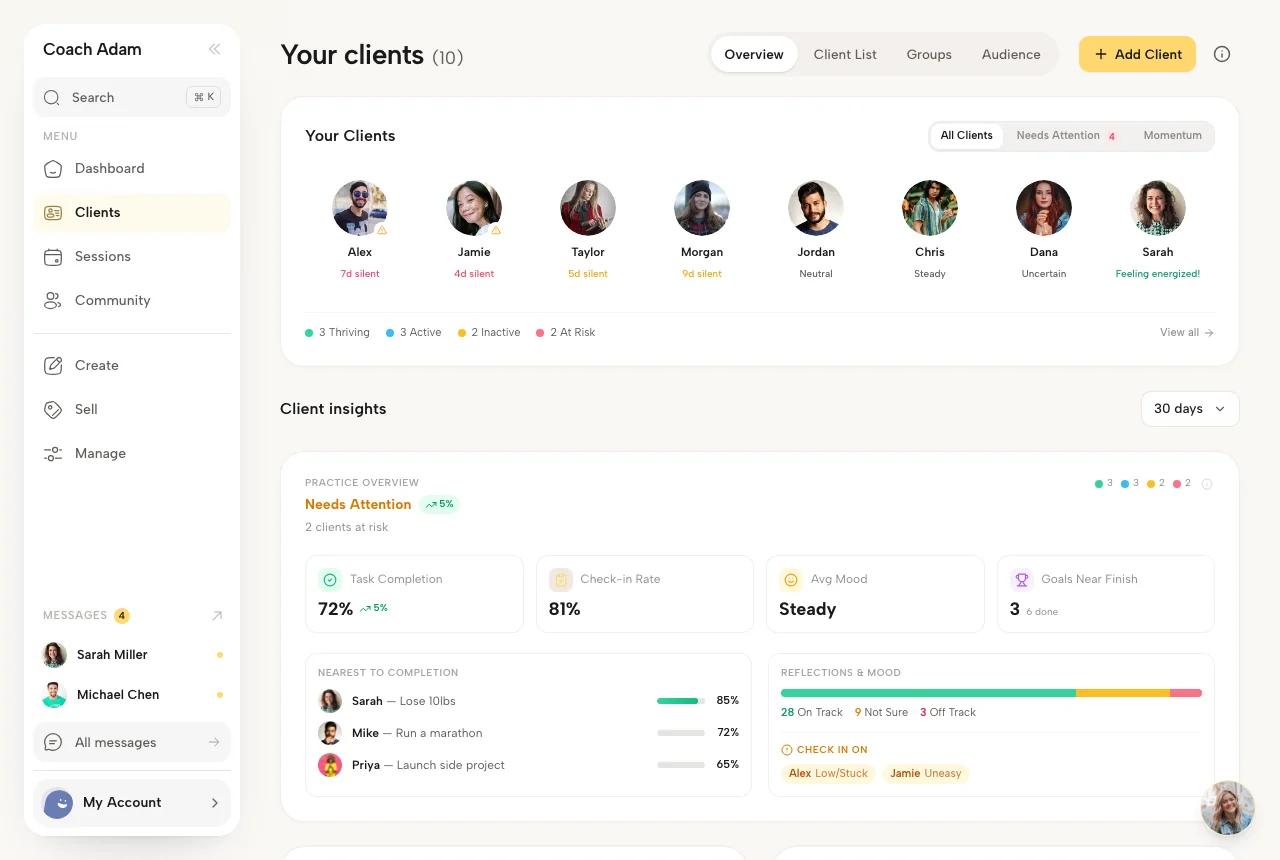
Coachful client workspace, captured 22–23 September 2026
Coachful client workspace · captured 22–23 September 2026

Best for

Coaches whose next revenue comes from groups, a second offer or a second coach.

Where it falls down

For an agency running many separate client brands, GoHighLevel is the right shape and we are not.
2

Kajabi

Kajabi scales in one direction extremely well: more content sold to more people with no additional delivery load, which is a legitimate answer to the capacity ceiling.

It does not scale the coaching book. Twelve active engagements with session histories and renewal dates still need a second system.

Kajabi home page, captured 22–23 September 2026
Kajabi home page · captured 22–23 September 2026

Best for

Coaches whose growth plan is genuinely content rather than more coaching.

Where it falls down

Scales content, not the coaching book; partial programmes and no scheduling.

3

GoHighLevel

GoHighLevel scales the marketing operation and agency structure better than anything else here, with sub-accounts and white labelling.

It ships no coaching layer, so scaling delivery is untouched. For a coach whose growth plan is more leads, it is the right tool for half the problem.

GoHighLevel home page, captured 22–23 September 2026
GoHighLevel home page · captured 22–23 September 2026

Best for

Coaches and agencies scaling acquisition rather than delivery.

Where it falls down

No coaching layer at all, so delivery does not scale with it.

4

Mighty Networks

Mighty Networks scales community and cohort delivery better than us, with a branded mobile app that keeps a large group engaged.

No scheduling and partial coaching programmes, so the one-to-one book does not scale with it and stays in a second system.

Mighty Networks home page, captured 22–23 September 2026
Mighty Networks home page · captured 22–23 September 2026

Best for

Practices scaling through community and cohorts.

Where it falls down

No scheduling; the one-to-one book scales elsewhere.

5

CoachAccountable

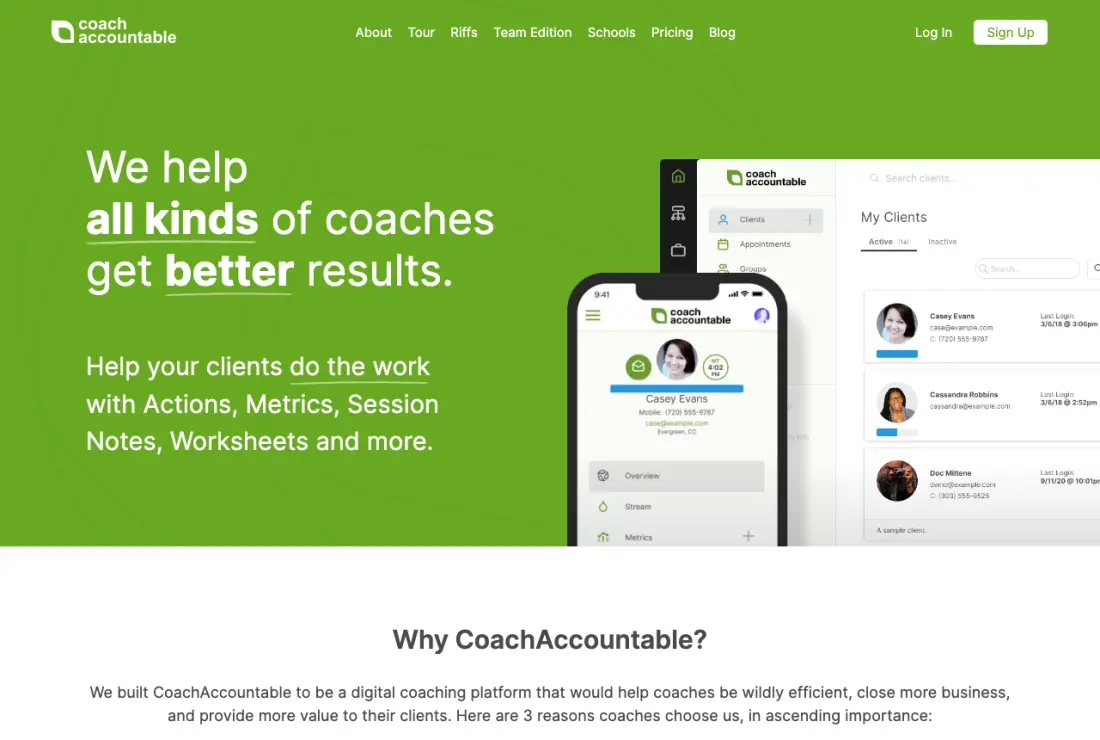
CoachAccountable scales a large one-to-one book well, because its accountability tooling gets more valuable the more clients there are to track.

Offer variety is where it stops rather than client count, and its pricing rises with clients, so the cost scales precisely as the practice does.

CoachAccountable home page, captured 22–23 September 2026
CoachAccountable home page · captured 22–23 September 2026

Best for

Practices scaling a large one-to-one book with heavy tracking.

Where it falls down

Limited offer variety, and pricing that rises with client numbers.

6

HoneyBook

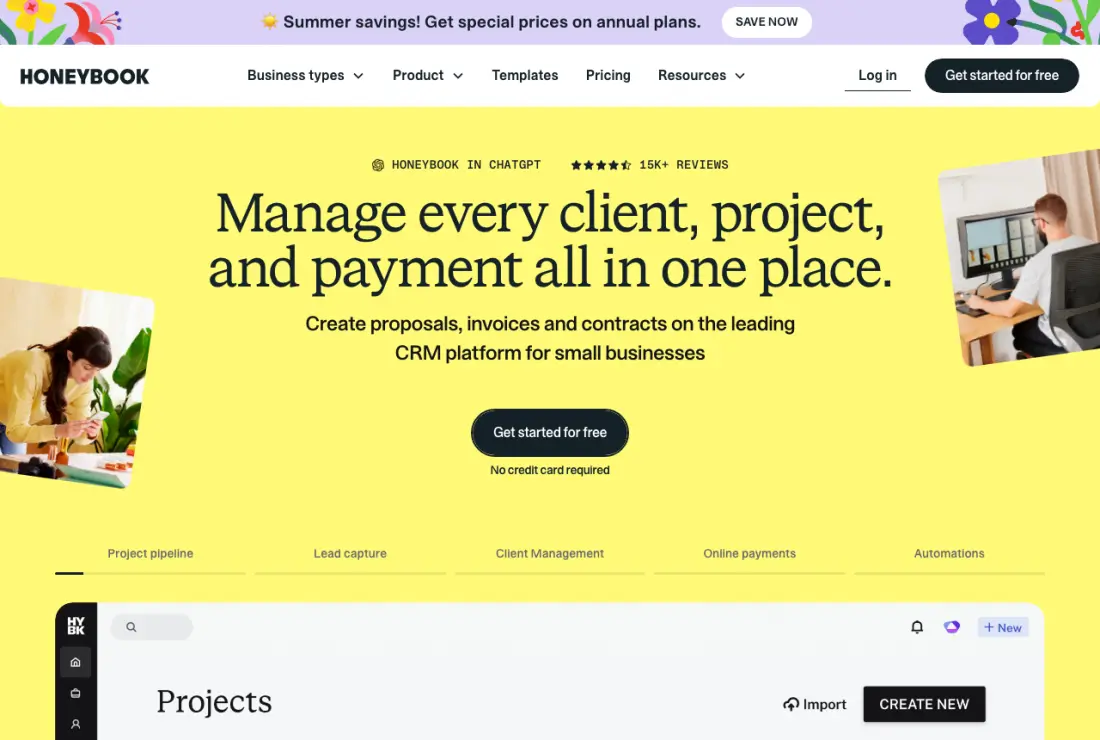
HoneyBook scales project and invoice volume across a team, which suits a practice growing into mixed delivery work.

It has no coaching structure and no cohorts, so neither of the two most common coaching growth paths is supported.

HoneyBook home page, captured 22–23 September 2026
HoneyBook home page · captured 22–23 September 2026

Best for

Practices scaling into mixed project and consulting work.

Where it falls down

No coaching structure and no group delivery.

The ceiling that forces the change

10–15Clients in a sustainable one-to-one book
94%Of coaches above $100k sell something beyond one-to-one
20–30%Of group participants who later buy one-to-one
55%Of revenue from existing clients, above $120k

What each product scales into

ProductPriceGroup cohortsSecond offer typeTeam seats
Coachfuloursfrom $29YesYesYes
Kajabi$179PartialContent onlyYes
GoHighLevel$97NoMarketing onlySub-accounts
Mighty Networks$41YesCommunity onlyLimited
CoachAccountable$20–$100LimitedLimitedYes
HoneyBook$36NoProjectsYes

Capacity benchmark from the ICF Global Coaching Study 2025; coverage from the comparison registry, verified May 2026.

The migration at the worst possible moment

The sequence is predictable enough to be worth naming. A tool is chosen for a first client because it is cheap and simple. The book fills.

The coach adds a group programme and discovers the tool has no concept of a cohort.

So the programme goes into a second product with its own client list, and the participant who becomes a one-to-one client afterwards exists twice, unlinked. That conversion runs at 20 to 30%, which makes it the warmest lead source most coaches have, and it is now invisible.

The cost of that is not the migration itself. It is that the migration happens in the quarter the practice finally started working, which is the quarter you had other plans for.

A coach planning to grow their practice
Photo by RDNE Stock project on Pexels
Scaling a coaching practice always means changing what you sell, because the calendar has a hard limit that effort cannot move.

Three growth paths, and they need different products

Leverage the delivery. Group programmes, cohorts, a membership. The same hours serve more people, and 20 to 30% of participants later buy one-to-one. This is the path most coaches can actually take, because it needs an audience rather than a network.

Leverage the product. Courses and content sold without delivery time. Kajabi is the right tool and the honest caveat is that the median coach earns under $5,000 from a course in year one, because distribution rather than production is what makes one sell.

Leverage the team. A second coach on shared client records with separate calendars. This breaks most solo tools immediately and is the hardest of the three to reverse.

Choosing the path before the product is the decision that matters. A coach who buys for group delivery and then hires, or buys for content and then builds a cohort, migrates at the worst possible moment either way.

What each growth path requires and returns

PathNeedsTime to revenueCeiling
Group programmesAn audience1–3 monthsHow often you can fill it
Corporate retainersA network3–12 monthsConcentration risk
Courses and contentDistributionMonths, if everEffectively none
A second coachConsistent delivery2–6 monthsManagement capacity
Higher pricesPositioningImmediateWhat the niche supports

The last row is included because it is the only path that does not require a new asset, and it is frequently the one skipped.

Common questions

What coaching software scales best?

One that handles a second offer type without a second subscription. Coachful runs one-to-one, groups, courses and retainers on one client record from $29 and we make it. Kajabi scales content; GoHighLevel scales marketing.

Why can a coaching practice not just add more clients?

Because a sustainable one-to-one book is ten to fifteen people. Past that, preparation, notes and the mental load of holding that many situations start degrading the coaching itself, and effort does not move that limit.

What should I add first when scaling?

Usually a group programme. It is the only addition that is profitable and doubles as a lead source, since 20 to 30% of participants go on to buy one-to-one coaching.

When should I change software?

Before adding the second offer, not after. Migrating in the quarter the practice starts working is the most expensive version of this decision and the most common one.

Does scaling mean hiring another coach?

It can, and it is the hardest version. A second coach needs shared client records and separate calendars under one brand, which breaks most solo tools immediately.

What actually limits a coaching practice?

The calendar. A sustainable one-to-one book is ten to fifteen clients, and past that preparation, notes and mental load degrade the work. No rate increase creates additional hours, which is why 94% of coaches above $100,000 sell something beyond one-to-one.

Which growth path should I choose?

Whichever your existing assets point at. An audience points at group programmes, a corporate network points at retainers, and a content audience points at courses. Choosing the path before the product avoids migrating at the moment things start working.

Can I scale a coaching practice without a second coach?

Yes, through group programmes, courses or corporate retainers. A second coach is the hardest of the four to reverse and the only one that adds management work rather than removing delivery work.

The verdict

Every product here scales something. Kajabi scales content, GoHighLevel scales marketing, Mighty Networks scales community, and each does it better than we do within that lane.

Coachful scales the coaching practice itself — groups, a second offer, a team, on one client record — which is what the capacity ceiling actually forces. The decision to make early is which of those growth paths you are on, because switching products halfway is what makes it expensive.

How to disagree with this

The criterion is the whole argument. If breadth is not what you need, this order is irrelevant to you and a different list will serve you better. That is why there are several, each ordered by something different.

For a version of the same products with no ordering at all, the alphabetical directory lists every one of them and picks nothing.

Published by Coachful, which makes one of the products ranked here. No affiliate links and no paid placement.

Other rankings