What is the best way for coaches to take payments?
8 min read1,691 wordsChecked 22 September 2026
Almost every product here can take a payment. That has not been the differentiator for years, and comparing products on whether they accept cards is comparing them on nothing.
What separates them is what happens after the first payment: whether an instalment plan collects itself, whether the payment knows which engagement it belongs to, and whether a client in another currency can pay without a wire transfer.
Those three are the criterion, and they matter because a $4,000 package quoted as a total is a wall for a private buyer while $667 a month is a decision.
The short answer
Ranked by recurring and instalment billing tied to the engagement and working internationally, Coachful is first from $29 a month and we make it, with HoneyBook at $36 stronger on invoicing generally. The feature that matters is instalments that collect themselves, because manual chasing costs more than the discount it avoided.
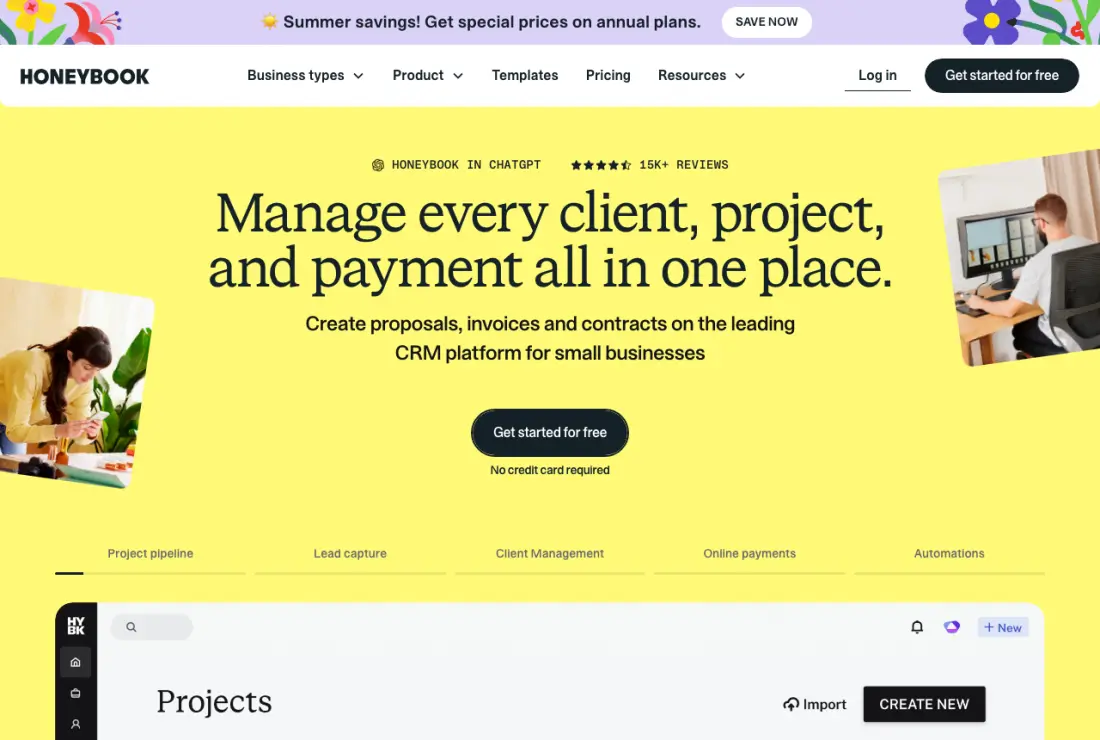
HoneyBook home page · captured 22–23 September 2026
3. Kajabi
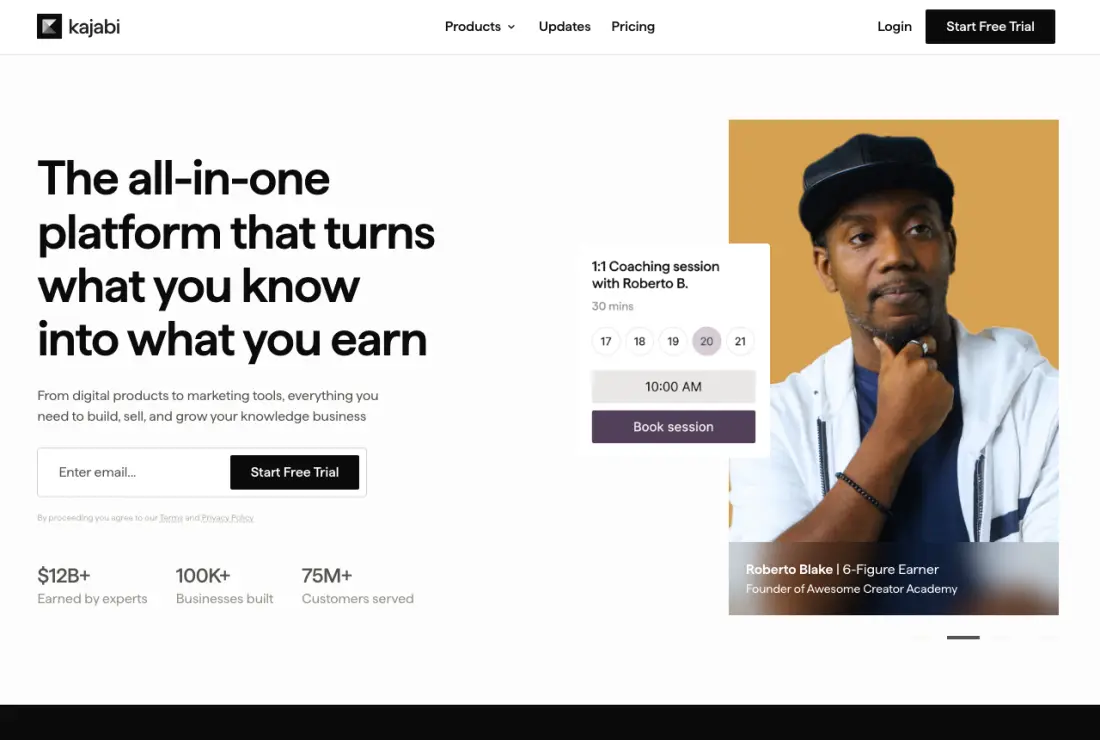
Kajabi home page · captured 22–23 September 2026
4. Paperbell
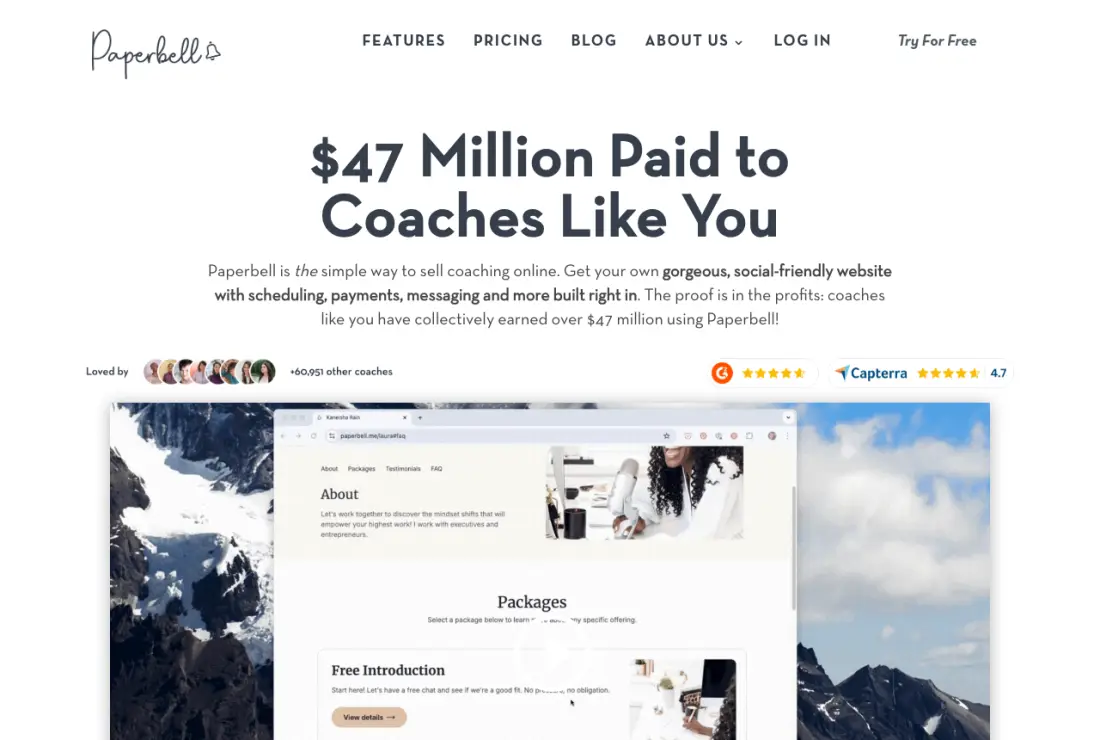
Paperbell home page · captured 22–23 September 2026
Every tool, in detail
1
Coachful
from $29/mo
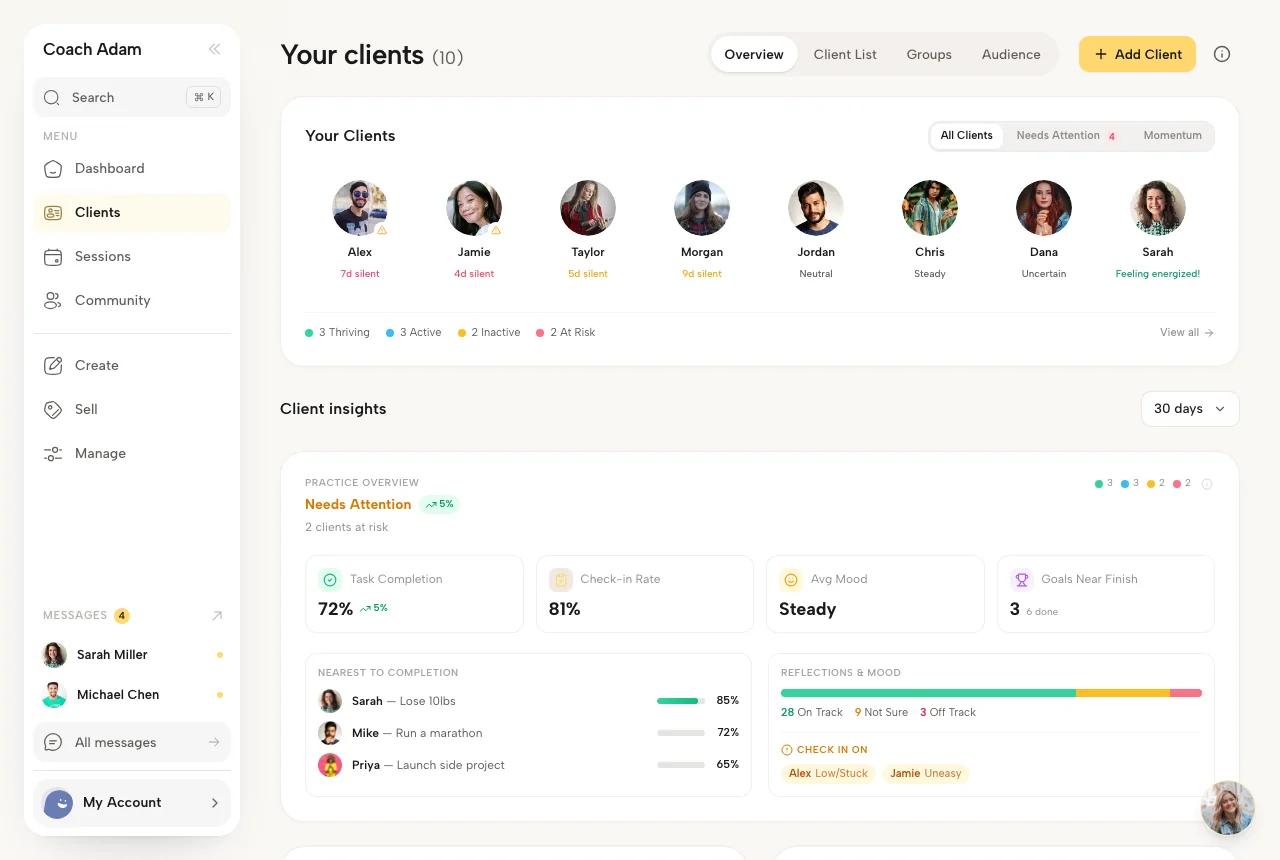
Coachful runs instalments that collect on schedule, tied to the engagement rather than floating as a subscription, with multi-currency checkout.
Tying the payment to the engagement is what makes the rest possible: a remaining balance, a session count and a renewal date all depend on the money knowing what it is for.
Coachful client workspace · captured 22–23 September 2026
Best for
Coaches selling packages with instalments who need the balance and renewal tracked.
Where it falls down
HoneyBook invoices more comprehensively for general service businesses.
2
HoneyBook
$36–129/mo
HoneyBook has the strongest general invoicing on this page — payment schedules, reminders and proposals — and is better than us at the commercial paperwork of a service business.
Payments attach to a project rather than a coaching engagement, so session counts and renewal dates are not modelled.
HoneyBook home page · captured 22–23 September 2026
Best for
Mixed practices wanting one invoicing system across coaching and project work.
Where it falls down
Payments tie to a project, so coaching engagements are not modelled.
3
Kajabi
$179–499/mo ($143–399 annual)
Kajabi has an excellent checkout with order bumps and upsells, which is better than ours for selling content.
Payments attach to a purchase granting access rather than an engagement, so an instalment plan is a subscription rather than part of a defined package.
Kajabi home page · captured 22–23 September 2026
Best for
Content businesses where checkout conversion is the main commercial lever.
Where it falls down
Payments tie to a purchase, and there is no engagement to attach a balance to.
4
Paperbell
$57/mo (per coach)
Paperbell ties payment to a sold package with instalments, which is the shape this criterion is about, and does it with very little setup.
Its scope stops at the package, so group billing, memberships and course sales are not part of what it can collect for.
Paperbell home page · captured 22–23 September 2026
Best for
Coaches billing straightforward package instalments with minimal setup.
Where it falls down
No group, membership or course billing.
5
Systeme.io
Free, then $17–97/mo
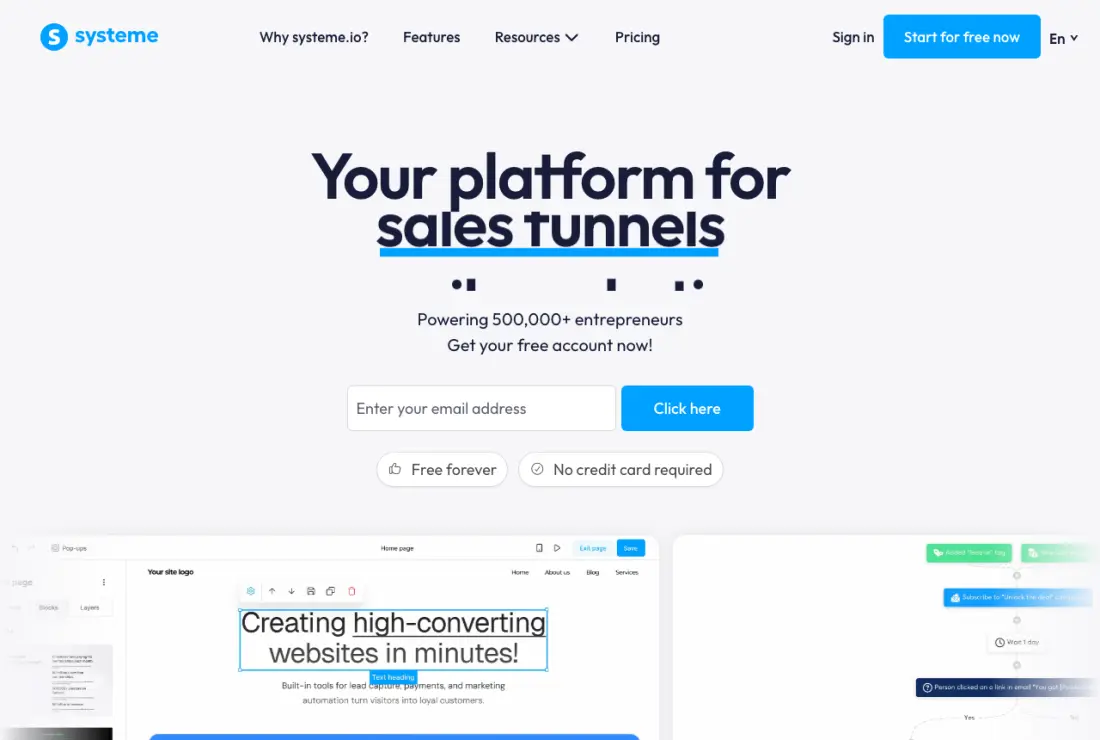
Systeme.io has a competent checkout with instalment support at $27, inside a funnel builder that is good at converting the sale in the first place.
Payments attach to a purchase rather than a coaching engagement, so there is no balance, session count or renewal for the money to relate to.
Systeme.io home page · captured 22–23 September 2026
Best for
Coaches whose payment problem is really a checkout-conversion problem.
Where it falls down
Payments attach to a purchase, not an engagement.
6
Dubsado
$20–40/mo
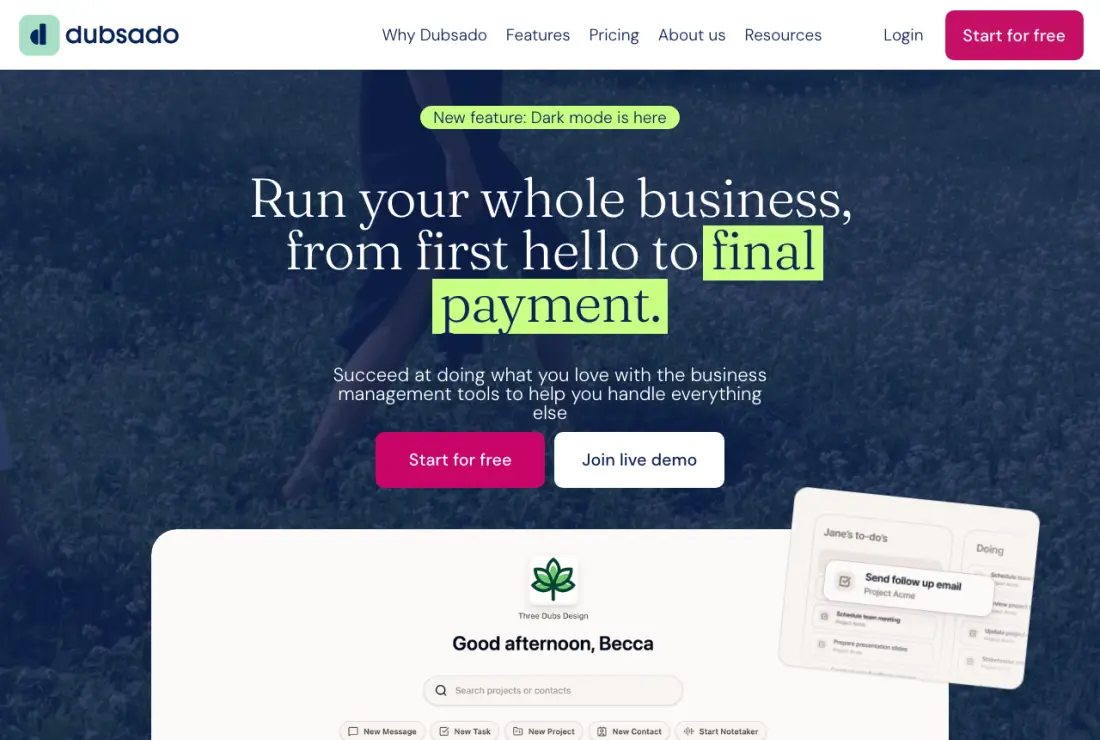
Dubsado handles payment schedules well alongside its proposal engine, with reminders and staged invoicing built in.
Payments attach to a project, and the configuration cost is weeks, which is a lot to spend to solve billing alone.
Dubsado home page · captured 22–23 September 2026
Best for
Practices with complex staged invoicing across projects.
Where it falls down
Project-shaped billing and weeks of configuration.
Why instalments decide more sales than price does
Consumer coaching engagements run $1,500 to $8,000, paid from taxed personal income. At that level the total is frequently the objection rather than the value.
The same package quoted monthly against a named outcome converts considerably better, and coaches who lead with the monthly figure close more without discounting.
That only works if collection is automatic. A manually chased instalment plan costs more in time and goodwill than the discount you were avoiding, and it turns a payment relationship into a monthly reminder that the client is behind.
The second-order requirement is that the payment knows what it is for. An instalment that is just a recurring charge tells you nothing about how much of the engagement is paid or when it ends.
Billing capability by product
Product
Price
Instalments
Tied to engagement
Multi-currency
Coachfulours
from $29
Yes
Yes
Yes
HoneyBook
$36
Best here
To a project
Limited
Kajabi
$179
Yes
To a purchase
Yes
Paperbell
$57
Yes
To a package
Yes
Systeme.io
$27
Yes
To a purchase
Yes
Dubsado
$40
Yes
To a project
Limited
Comparison registry, verified May 2026. Processing fees of roughly 3% apply regardless of product and are not included.
Photo by Jonathan Borba on PexelsA manually chased instalment plan costs more in time and goodwill than the discount it was meant to avoid.
What happens when an instalment fails
It will. Cards expire, limits are hit, banks decline things for no visible reason. On a six-month instalment plan across a dozen clients, several failures a year is normal rather than exceptional.
What matters is what the product does next. Does it retry automatically? Most processors do, on a schedule, which resolves a meaningful share without anyone being contacted. Does it tell the client? A polite automated message resolves most of the rest. Does it tell you? And does the engagement pause, or continue while unpaid?
Products differ considerably here and almost nobody evaluates it, because it is invisible until month three. It is also where the goodwill in a coaching relationship gets spent, since the alternative is you personally chasing a client who is embarrassed.
The same package, quoted three ways
How it is quoted
What the buyer hears
Typical outcome
"$4,000 for six months"
A large total
Thinking about it
"$667 a month for six months"
A monthly decision
A decision this week
"$667 a month to get X by March"
A priced outcome
The strongest version
Identical revenue in all three cases. The difference is what the buyer is being asked to decide, and it is the cheapest change available to most coaches.
Getting paid across borders
The regional income data shows a four-to-one gap between the highest and lowest-paid coaching markets, and almost nothing about remote delivery justifies it. The rate follows the market you sell into.
What stops coaches acting on that is rarely demand. It is whether a client abroad can pay with a normal card in their own currency, without a wire transfer, an invoice in an unfamiliar format or a conversation about bank details.
Multi-currency checkout is therefore a commercial feature rather than a convenience, and it is the single operational thing most likely to be standing between a coach and a considerably better-paid market.
Common questions
What is the best coaching software for payments?
Against instalments tied to the engagement and working internationally, Coachful from $29 a month and we make it. HoneyBook at $36 has stronger general invoicing and ties payments to a project rather than a coaching engagement.
Should I offer payment plans?
Yes, and quote the monthly figure first. A $4,000 package stated as a total is a wall for a private buyer; the same package at $667 a month against a named outcome is a decision they can make.
Do instalments need to collect automatically?
Always. Chasing a monthly payment costs more in time and goodwill than the discount you were avoiding by not asking for the full amount up front, and it puts the client in a permanent state of being behind.
What do payment processing fees cost?
Around 3% of revenue, which is roughly $150 a month on $5,000 and is unavoidable. What you can avoid is paying it to two or three separate processors because your checkout, scheduler and course platform each have their own.
Can I take international payments?
Most products here support multi-currency, and it matters more than coaches expect: if a client in another country cannot pay with a normal card in their own currency, that is where cross-border coaching stops rather than at any lack of demand.
What happens when a client’s payment fails?
A good setup retries automatically, notifies the client politely, and tells you if it still fails. A poor one leaves you personally chasing an embarrassed client, which costs more goodwill than the payment is worth.
Can coaches take international payments?
Most products here support multi-currency, and it matters more than expected. If a client abroad cannot pay with a normal card in their own currency, that is where cross-border coaching stops — not at any lack of demand.
How should I quote a coaching package price?
Monthly, against a named outcome, before the total. "$667 a month to get X by March" converts considerably better than "$4,000 for six months" at identical revenue, because it asks the buyer to make a smaller and clearer decision.
The verdict
HoneyBook is better at invoicing in general and if your practice is mixed across coaching and project work, one commercial system is a strong argument.
Coachful wins the stated criterion because the payment knows which engagement it belongs to, which is what makes a renewal date, a remaining balance and a session count exist at all. And whatever you choose, make the instalments automatic — that single decision does more for cash flow than any pricing change.
How to disagree with this
The criterion is the whole argument. If breadth is not what you need, this order is irrelevant to you and a different list will serve you better. That is why there are several, each ordered by something different.
For a version of the same products with no ordering at all, the alphabetical directory lists every one of them and picks nothing.
Published by Coachful, which makes one of the products ranked here. No affiliate links and no paid placement.