



Coach Platforms
All rankings

Best for health and wellness coaches

What is the best software for health and wellness coaches?

7 min read1,681 wordsChecked 22 September 2026

Health and wellness coaching has a delivery problem no other niche shares: almost all of the work happens when you are not there. Meals, movement, sleep and habits occur daily, and the weekly session is a review of something that already happened.

That makes the client app the primary product surface rather than a convenience. If the client is not opening something on their phone most days, the coaching is running on memory and honesty.

The criterion here is therefore narrow: habit tracking and a client-facing app, because adherence is where health coaching succeeds or does not.

The short answer

Ranked by habit tracking and a client-facing app, Coachful is first from $29 a month and we make it, with HubFit close behind at $29 for adherence tracking specifically. Health coaching adherence happens on a phone between sessions, which is why the client app matters more in this niche than in any other.

Best for health and wellness coaches
Photo by Kampus Production on Pexels

Ranked by

Habit tracking and a client-facing app, because adherence happens on a phone

Health outcomes depend on what the client does on the six days you are not in the room with them.

Coachful logoCP 01-001CoachfulCoaching platformfrom $29/mo

Number one

Coachful

coaching platform · from $29/mo

Habits, check-ins and a client app, with programmes structured over weeks.

Coachful client workspace, captured 22–23 September 2026
Coachful client workspace · captured 22–23 September 2026

The full ranking

Pricing verified May 2026

Two through 6

HuCP 01-022HubFitFitness coaching toolVariesCoCP 02-023CoachAccountableCoaching admin tool$20–100/mo (by client count)Mighty Networks logoCP 06-024Mighty NetworksCommunity platform$95–215/mo + 1–2% of salesDelenta logoCP 01-045DelentaCoaching platform$29–79/mo (by client-portal cap)Paperbell logoCP 02-016PaperbellCoaching admin tool$57/mo (per coach)

2. HubFit

HuHubFithubfit.app did not respond to an automated request. The product may still be live; we will not publish a capture we could not take.
HubFit · no capture

3. CoachAccountable

CoachAccountable home page, captured 22–23 September 2026
CoachAccountable home page · captured 22–23 September 2026

4. Mighty Networks

Mighty Networks home page, captured 22–23 September 2026
Mighty Networks home page · captured 22–23 September 2026

Every tool, in detail

1

Coachful

Coachful covers habits, check-ins, programme progress and a client app from $29, with group cohorts on the same client list — which matters because cohorts are how health coaching economics improve.

The client app is the part that does the work in this niche: it is where adherence is recorded daily rather than reconstructed weekly from memory.
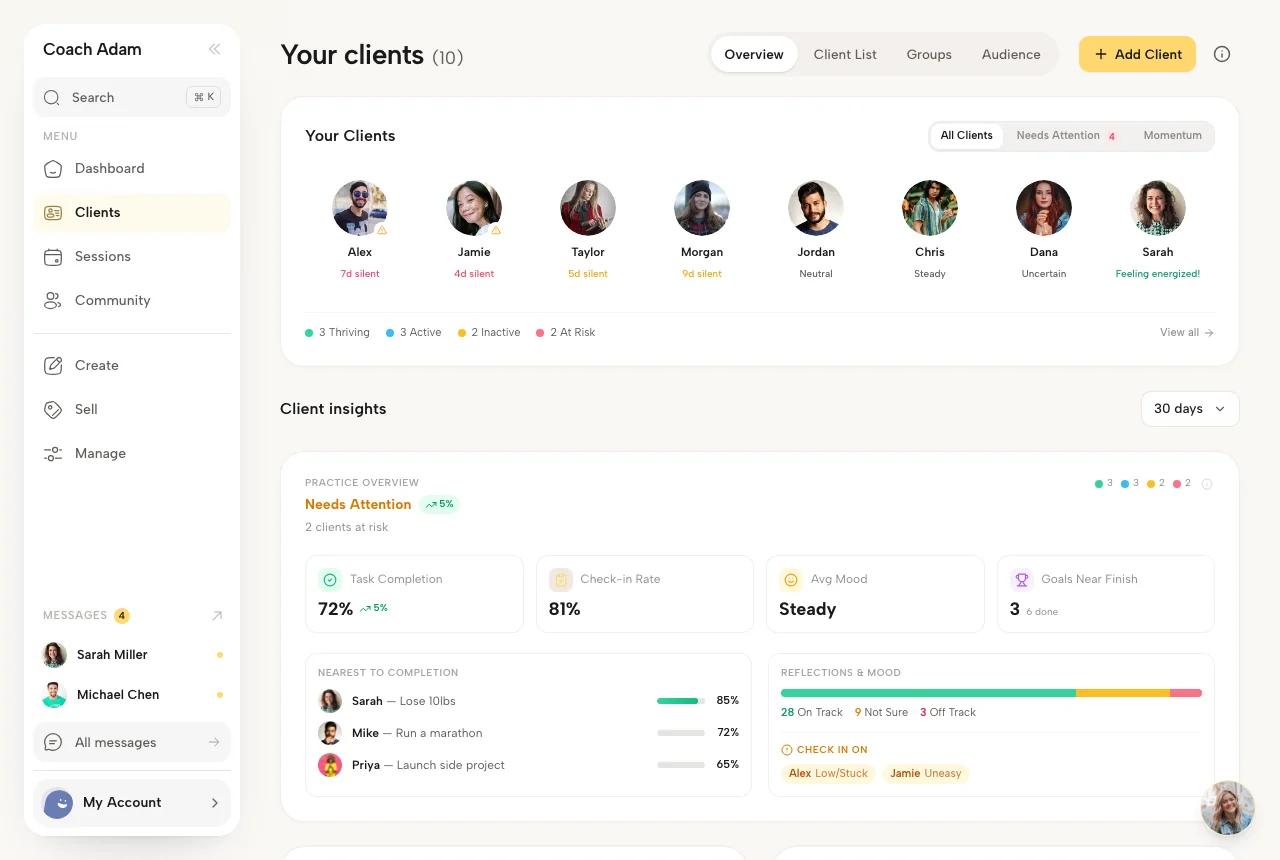
Coachful client workspace, captured 22–23 September 2026
Coachful client workspace · captured 22–23 September 2026

Best for

Health coaches running programmes and cohorts who need daily adherence visible on a phone.

Where it falls down

HubFit tracks fitness-shaped adherence more deeply than we do.

2

HubFit

HubFit has the strongest adherence tracking on this page for programming built around repeated daily actions, which is exactly the shape of fitness and nutrition coaching.

It is narrower outside that shape. General wellness coaching without daily programming gets less from it, and the commerce and content layers are thinner than the broader products here.

HuHubFithubfit.app did not respond to an automated request. The product may still be live; we will not publish a capture we could not take.
HubFit · no capture

Best for

Fitness and nutrition coaches with structured daily programming.

Where it falls down

Built around fitness programming, so general wellness coaching fits less well.

3

CoachAccountable

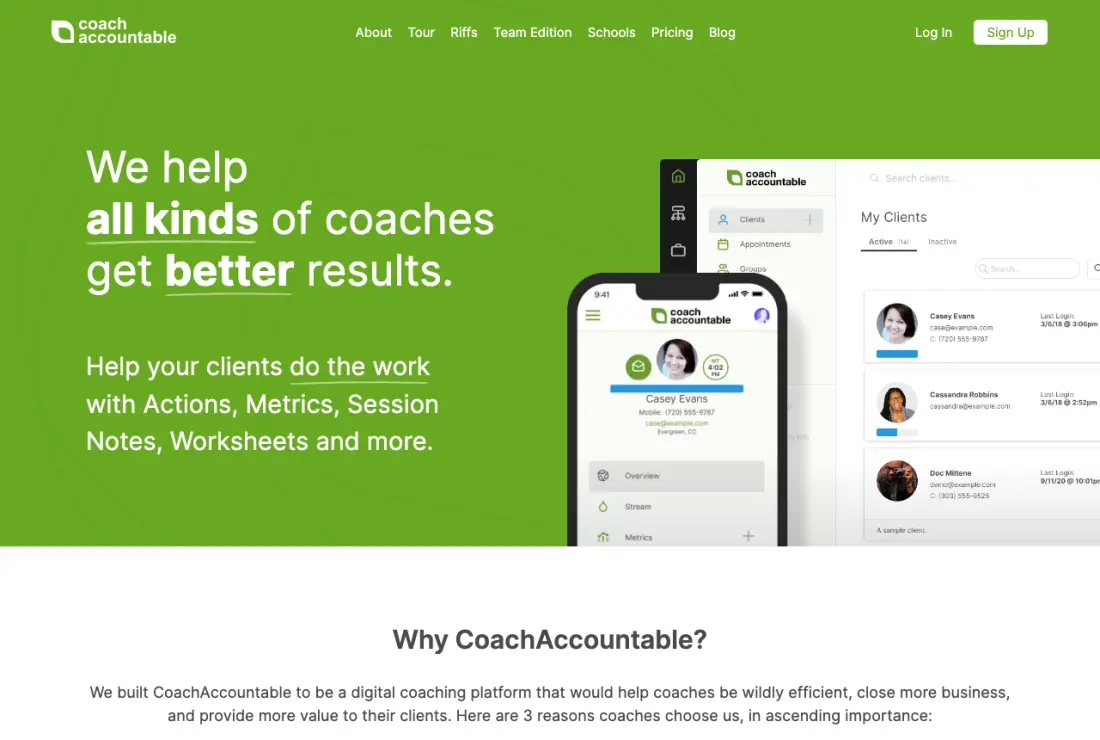
CoachAccountable brings actions and metrics tracked over time, which covers a large part of the adherence problem in a more general way than HubFit does.

Its client-facing surface is a portal rather than a mobile app, which in a niche where adherence happens on a phone is a meaningful difference.

CoachAccountable home page, captured 22–23 September 2026
CoachAccountable home page · captured 22–23 September 2026

Best for

Health coaches whose tracking is metric-led rather than programme-led.

Where it falls down

A portal rather than a mobile app, in a niche where the phone is the product surface.

4

Mighty Networks

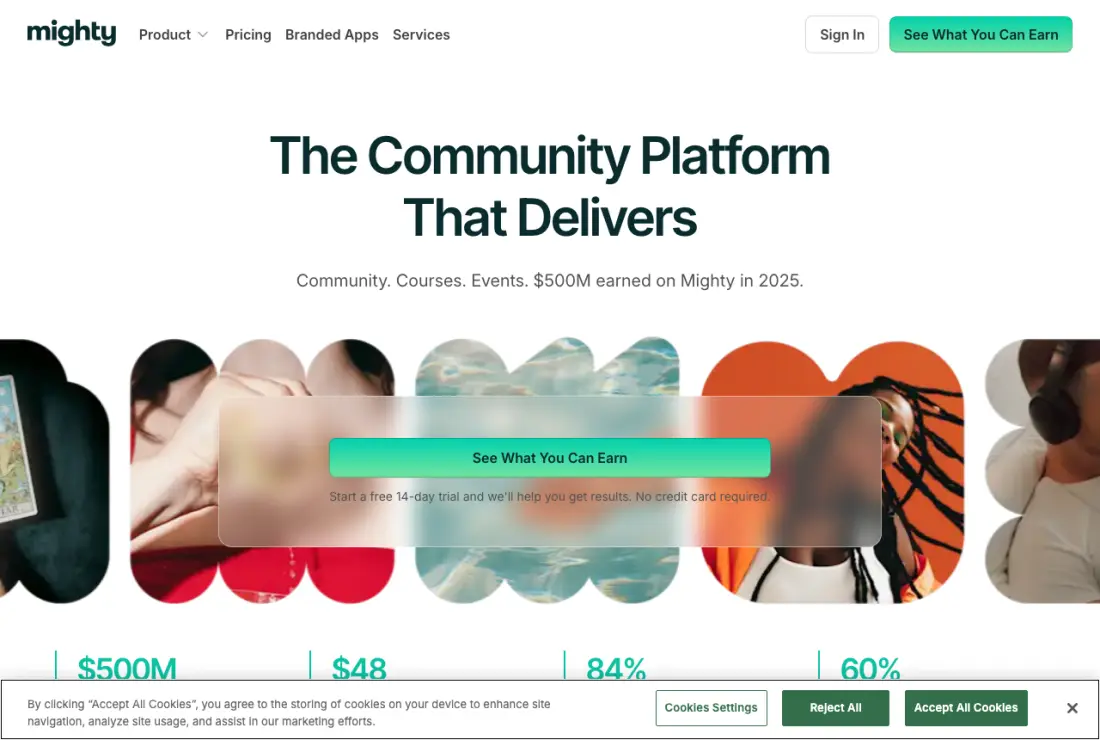
Mighty Networks is strong on the group half of health coaching: cohort courses bound to a community, with a branded mobile app members actually open.

It has no habit tracking and no scheduling, so the adherence data this criterion is about does not exist inside it.

Mighty Networks home page, captured 22–23 September 2026
Mighty Networks home page · captured 22–23 September 2026

Best for

Health coaches whose delivery is community-led rather than adherence-led.

Where it falls down

No habit tracking and no scheduling.

5

Delenta

Delenta includes scheduling, video and programme structure at $19, which covers a lot of a health coaching practice cheaply.

Habit tracking is partial, which against a criterion built on adherence is the material gap.

Delenta home page, captured 22–23 September 2026
Delenta home page · captured 22–23 September 2026

Best for

Health coaches who want scheduling, video and programmes at the lowest price.

Where it falls down

Partial habit tracking, which is the core of this criterion.

6

Paperbell

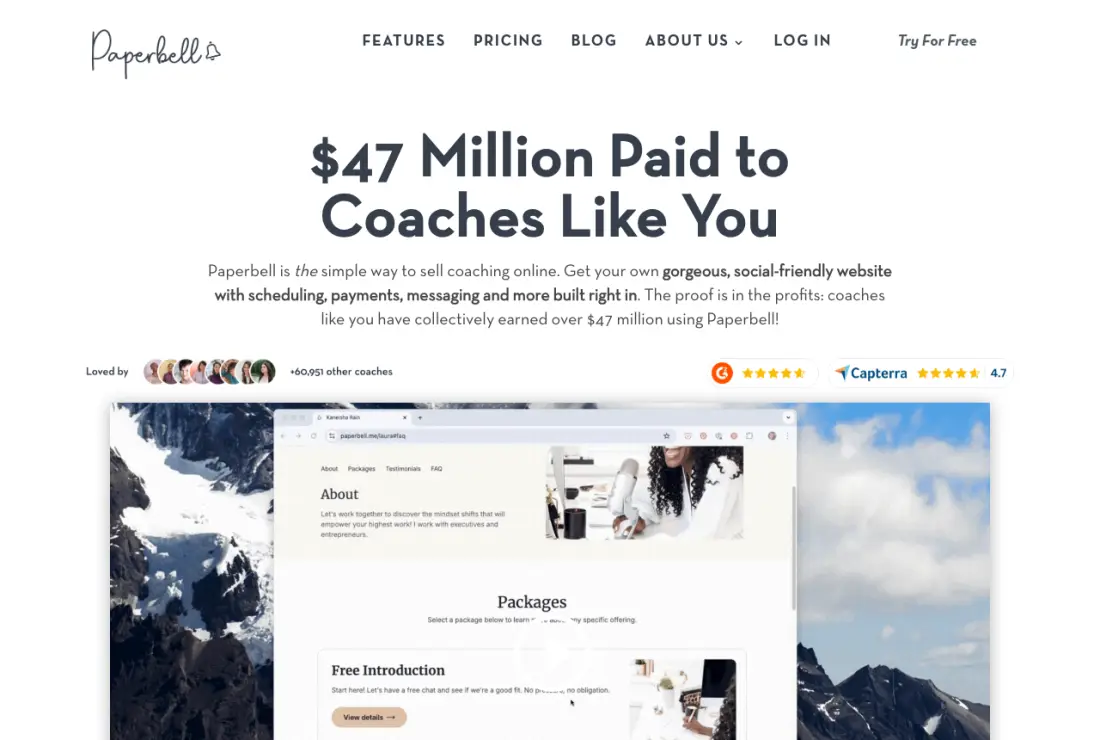
Paperbell sells the twelve-week programme and takes the payment cleanly, which is the commercial half of this niche.

It has no habit tracking, no client app and no cohort support, so everything that happens between the sale and the end of the programme is elsewhere.

Paperbell home page, captured 22–23 September 2026
Paperbell home page · captured 22–23 September 2026

Best for

Health coaches who want to sell programmes and track adherence elsewhere.

Where it falls down

No tracking, no client app and no cohorts.

Why this niche is different

A business coaching engagement produces its results in the client’s working week and gets reviewed in the session. A health engagement produces its results in daily behaviour, and the session is mostly a diagnostic on adherence.

That inverts the role of the software. In most niches the client-facing surface is where they book and pay. Here it is where the coaching actually happens between sessions, and a product whose client experience is an email and a calendar invite has no way to support it.

It is also the niche with the strongest substitutes. A client is comparing you against apps that cost $17 a month and do habit tracking very well, so an obviously worse tracking experience is a genuine competitive problem rather than an inconvenience.

Adherence tooling by product

ProductPriceHabit trackingClient appProgramme structure
Coachfuloursfrom $29YesYesYes
HubFit$29Best hereYesFitness-shaped
CoachAccountable$20–$100Actions and metricsPortalYes
Mighty Networks$41NoneYesCohort courses
Delenta$19PartialYesYes
Paperbell$57NoneNoNo

Comparison registry, verified May 2026. HubFit’s adherence tracking is built around fitness programming specifically.

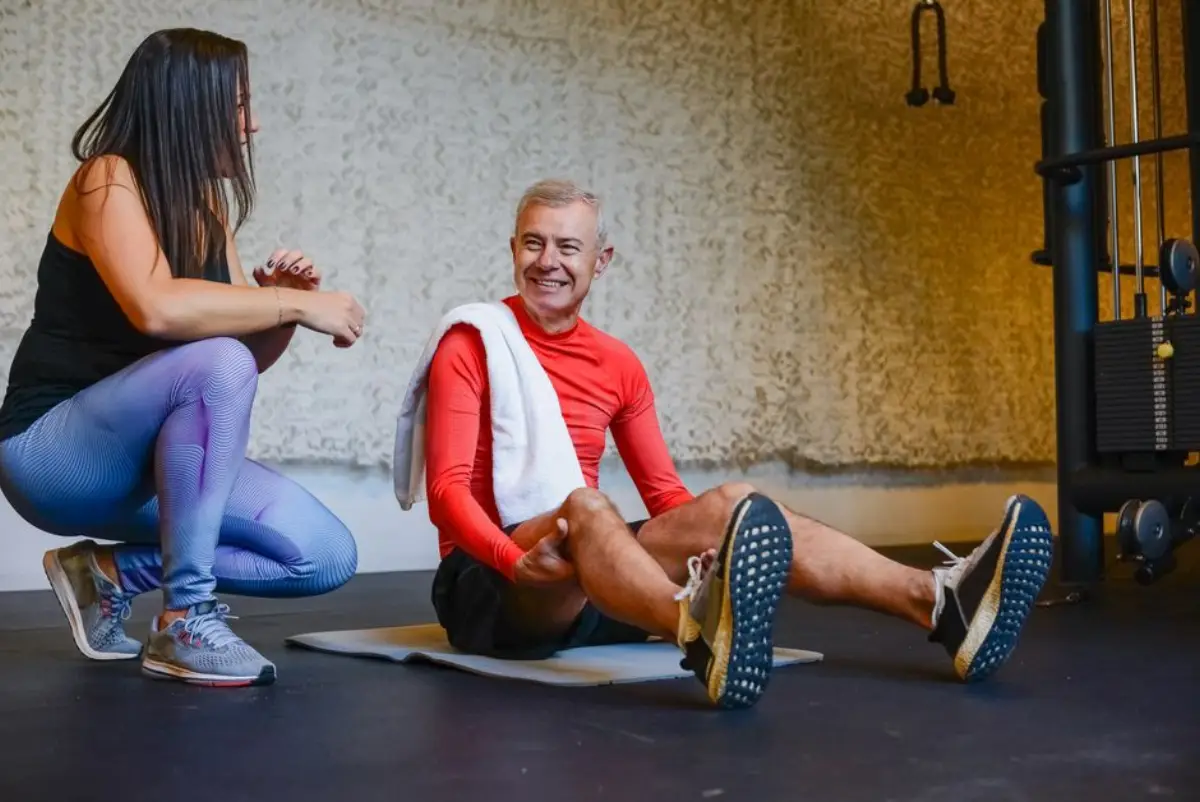
A health coach reviewing client progress
Photo by Anastasia Shuraeva on Pexels
In health coaching the weekly session reviews behaviour that already happened. The app is where the coaching actually lives.

Why the group format changes the economics here

Health and wellness has the largest client pool in coaching and one of the lower income bands, and those are the same fact: enormous demand, low barriers, and a buyer comparing you against very cheap substitutes.

The coaches at the top of the band almost never got there by charging more per hour. They changed the unit. A twelve-week programme delivered to a cohort of fifteen converts the same delivery hours into several times the revenue.

It also improves the outcome, which is the unusual part. Accountability in this subject genuinely benefits from a group in a way it does not in executive coaching, so the leveraged format is also the better format. That is why cohort support belongs in this criterion rather than in a separate list.

What a twelve-week health programme needs from software

  • A cohort with a start date, an end date and per-participant progress
  • Daily or near-daily habit logging on a phone
  • Bounded messaging, so unlimited support does not become an unpaid job by week six
  • Per-seat billing with instalments, because $900 to $2,000 is a real decision
  • Somewhere the participants can see each other, which is most of why the format works

Moving a health practice from hourly to programmes

The change that moves this niche from the middle of its band to the top, in the order it works.

  1. Write down the twelve weeks you already deliver

    You have run this sequence one-to-one a dozen times. Documenting it is the work; inventing a new curriculum is not.

  2. Pre-sell the first cohort before building anything

    If eight people do not buy, you have saved forty hours. If they do, you build it with participants telling you what they need next week.

  3. Define the contact window in the package

    Weekday messaging within 24 hours, for example. Unlimited access reads as generous at the sale and becomes an unpaid job around week six.

  4. Price per seat with instalments

    $900 to $2,000 is the observed range. At that level the monthly figure closes considerably better than the total.

  5. Track who converts to one-to-one afterwards

    It will be a fifth to a third of the room. If nobody measures it, the programme gets judged on seat revenue alone and frequently not run again.

Common questions

What is the best software for health coaches?

Against habit tracking and a client app, Coachful from $29 a month and we make it, with HubFit at $29 stronger on adherence tracking for fitness-shaped programming specifically.

Why does the client app matter so much in health coaching?

Because the work happens daily and the session reviews it. If the client is not opening something on their phone most days, adherence is running on memory and the coaching has no data to work from.

How do I compete with a $17 habit app?

Not on tracking features. On accountability from a person, programme design and adjustment. But the tracking experience still has to be good enough that the comparison does not become the conversation.

Should health coaches run group programmes?

The economics strongly favour it. A twelve-week programme with a cohort converts the same delivery hours into several times the revenue, and accountability in this subject genuinely benefits from a group.

Is HubFit only for fitness coaches?

It is built around fitness-shaped programming, which suits fitness and nutrition work well. For general wellness or health coaching without daily programming, the fit is narrower.

How much do health coaches earn?

$52,000 to $77,000 typically, achieved through volume rather than rate. The coaches at the top of that band are almost always running programmes and cohorts rather than charging more per session.

Should health coaching messaging be unlimited?

No. Define the window in the package — weekdays within 24 hours, for example. Unlimited access reads as generous at the point of sale and becomes an unpaid job around week six.

How do health coaches earn at the top of their band?

By changing the unit rather than the rate. A twelve-week programme delivered to a cohort converts the same hours into several times the revenue, and adherence improves because the group provides accountability the coach cannot.

The verdict

HubFit is better than us at adherence tracking for fitness-shaped programming and costs the same, and for a coach doing structured physical programming it is worth a serious look.

Coachful wins the broader version of this criterion because habits, the client app, programmes and group cohorts sit together, and cohorts are how this niche’s economics actually work. The thing neither product changes is that health coaching is priced against very cheap substitutes, and specificity is what moves you out of that comparison.

How to disagree with this

The criterion is the whole argument. If breadth is not what you need, this order is irrelevant to you and a different list will serve you better. That is why there are several, each ordered by something different.

For a version of the same products with no ordering at all, the alphabetical directory lists every one of them and picks nothing.

Published by Coachful, which makes one of the products ranked here. No affiliate links and no paid placement.

Other rankings