What is the best platform for group coaching programmes?
7 min read1,668 wordsChecked 22 September 2026
Group coaching is the most economically significant addition most coaches make. Twelve seats at $1,500 is $18,000 delivered in one weekly call, and the marginal cost of the thirteenth participant is effectively zero.
It is also a lead source. Between 20 and 30% of participants go on to buy one-to-one coaching, having watched the coach work for twelve weeks rather than read a page about it.
The criterion here is whether cohorts, community and group billing live in one system, because that second number only shows up if participants and clients are the same records.
The short answer
Ranked by cohorts, community and group billing in one system, Coachful is first from $29 a month and we make it, with Mighty Networks at $41 stronger on community-bound cohorts. Group coaching is the highest-leverage model most coaches can reach, and 20 to 30% of participants later buy one-to-one.
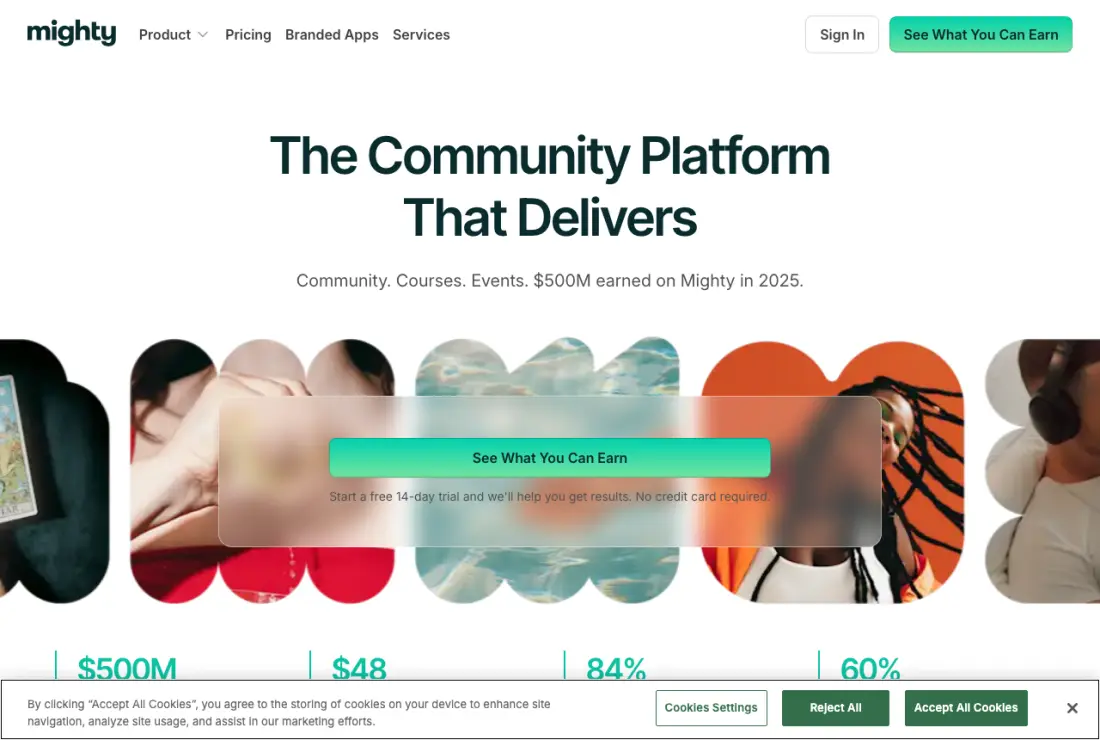
Mighty Networks home page · captured 22–23 September 2026
3. Skool & Circle
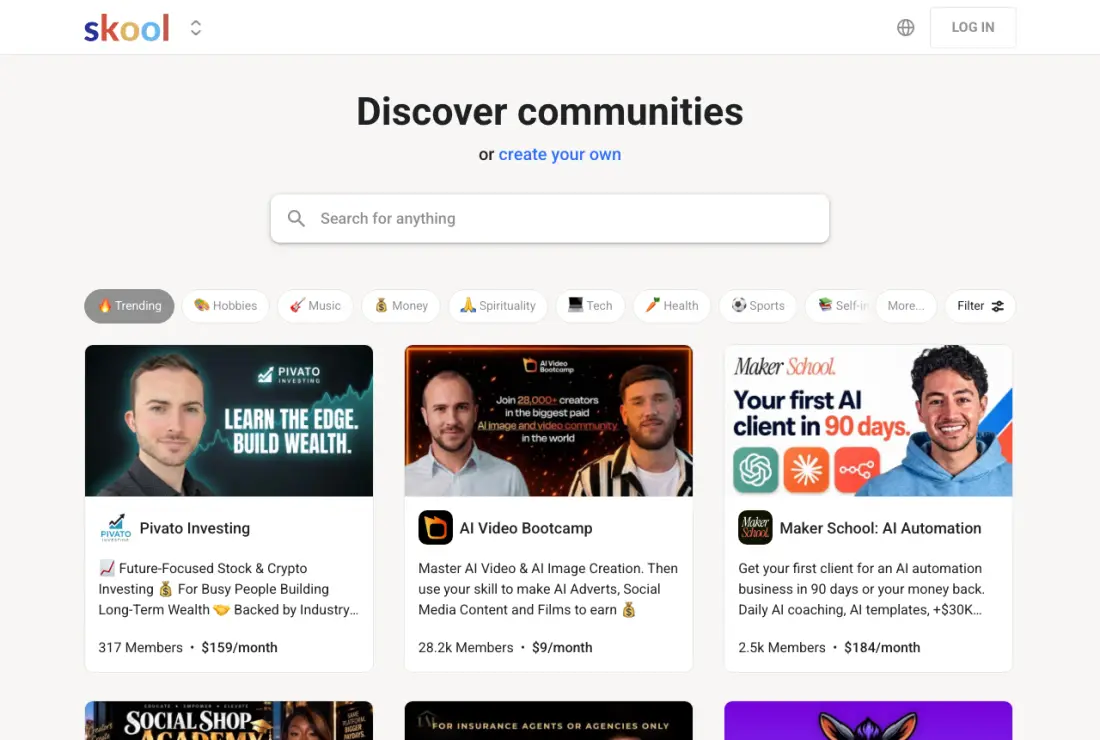
Skool & Circle home page · captured 22–23 September 2026
4. Kajabi
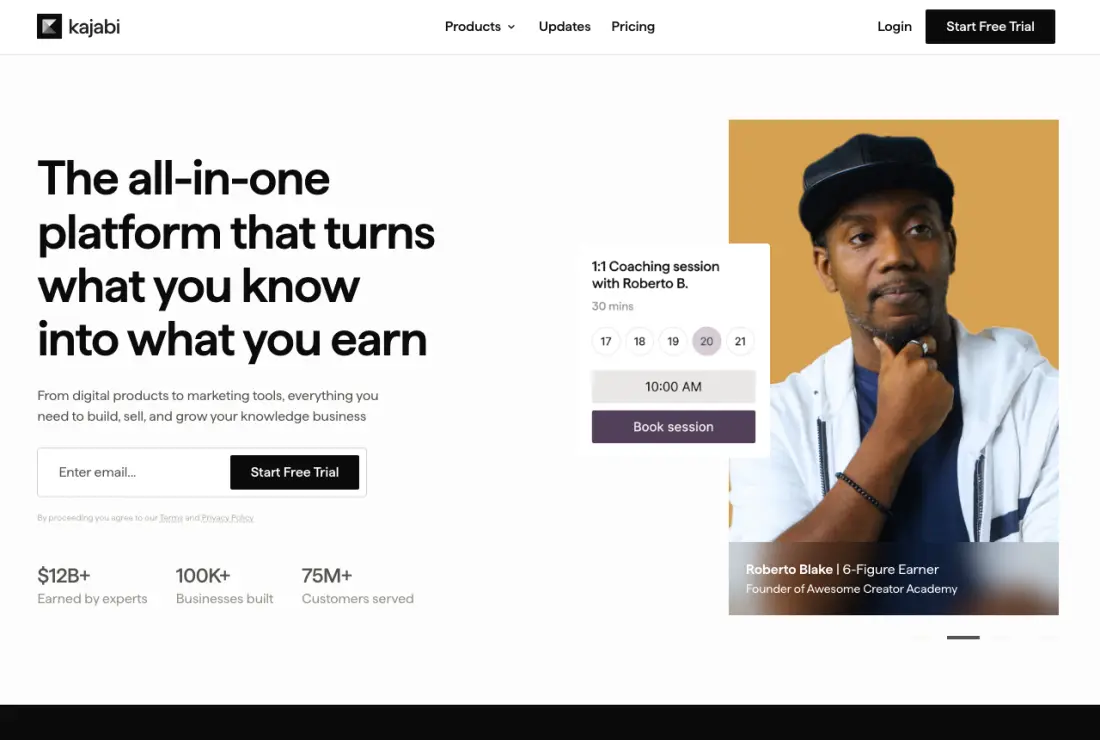
Kajabi home page · captured 22–23 September 2026
Every tool, in detail
1
Coachful
from $29/mo
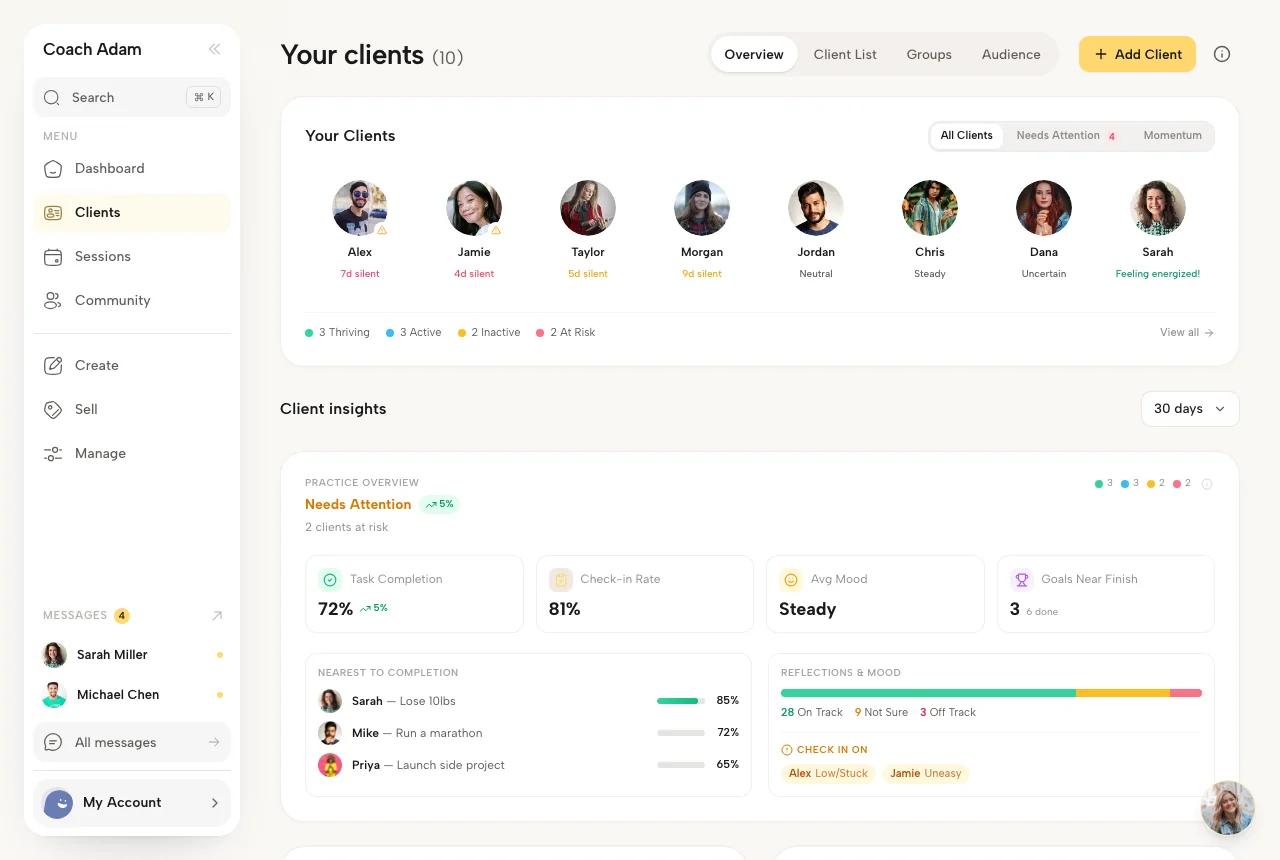
Coachful runs cohorts with a start and an end, community discussion and per-seat billing with instalments, on the same client records as one-to-one work.
That last part is the criterion doing the work: a participant who becomes a coaching client is the same person rather than a new record, which is how the conversion is noticed at all.
Coachful client workspace · captured 22–23 September 2026
Best for
Coaches running cohorts alongside one-to-one work who want to see the conversion between them.
Where it falls down
A dedicated community product has a better feed and stronger culture tooling.
2
Mighty Networks
$95–215/mo + 1–2% of sales
Mighty Networks is better than us at binding a cohort to a community, and its branded mobile app gives participants a better group experience than most client portals.
It has no scheduling and coaching programmes are partial, so the one-to-one half of the practice runs elsewhere with a separate list.
Mighty Networks home page · captured 22–23 September 2026
Best for
Community-led practices where the cohort and the community are the same thing.
Where it falls down
No scheduling and partial coaching programmes, so one-to-one work is separate.
3
Skool & Circle
$49–99/mo
Skool and Circle run a better community than any coaching platform on this site, and for a business where the group genuinely is the product they are the right answer.
Cohort structure is limited and there is no coaching layer, so a structured twelve-week programme with progress per participant is not what they are built for.
Skool & Circle home page · captured 22–23 September 2026
Best for
Businesses where a paid community is the product rather than a delivery format.
Where it falls down
Limited cohort structure and no coaching layer at $99 a month.
4
Kajabi
$179–499/mo ($143–399 annual)
Kajabi handles the content and checkout side of a group programme extremely well, which matters when a cohort includes recorded material.
Coaching programmes are recorded as partial and live group work is weaker than a dedicated cohort product, so the group experience itself is thinner.
Kajabi home page · captured 22–23 September 2026
Best for
Group programmes that are mostly recorded content with light live sessions.
Where it falls down
Partial coaching programmes and weaker live group work.
5
Thinkific
$49–199/mo, 0% platform fee
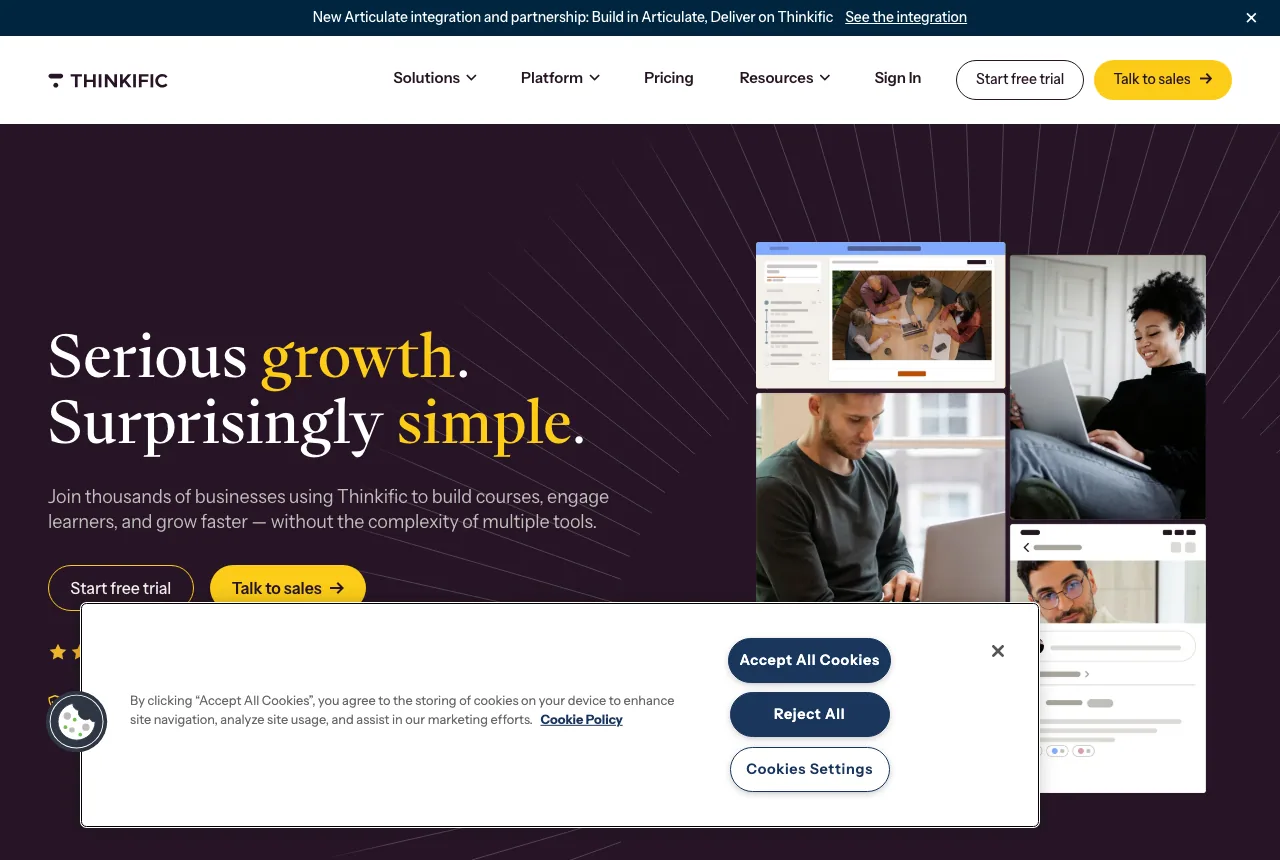
Thinkific supports cohort-based courses with community attached at $49, which covers the delivery half of a group programme competently.
Coaching programmes are partial and there is no scheduling, so live group sessions and the one-to-one conversion both sit elsewhere.
Thinkific home page · captured 22–23 September 2026
Best for
Cohort courses where the material is the substance and discussion supports it.
Where it falls down
No scheduling, and partial coaching programmes.
6
Delenta
$29–79/mo (by client-portal cap)
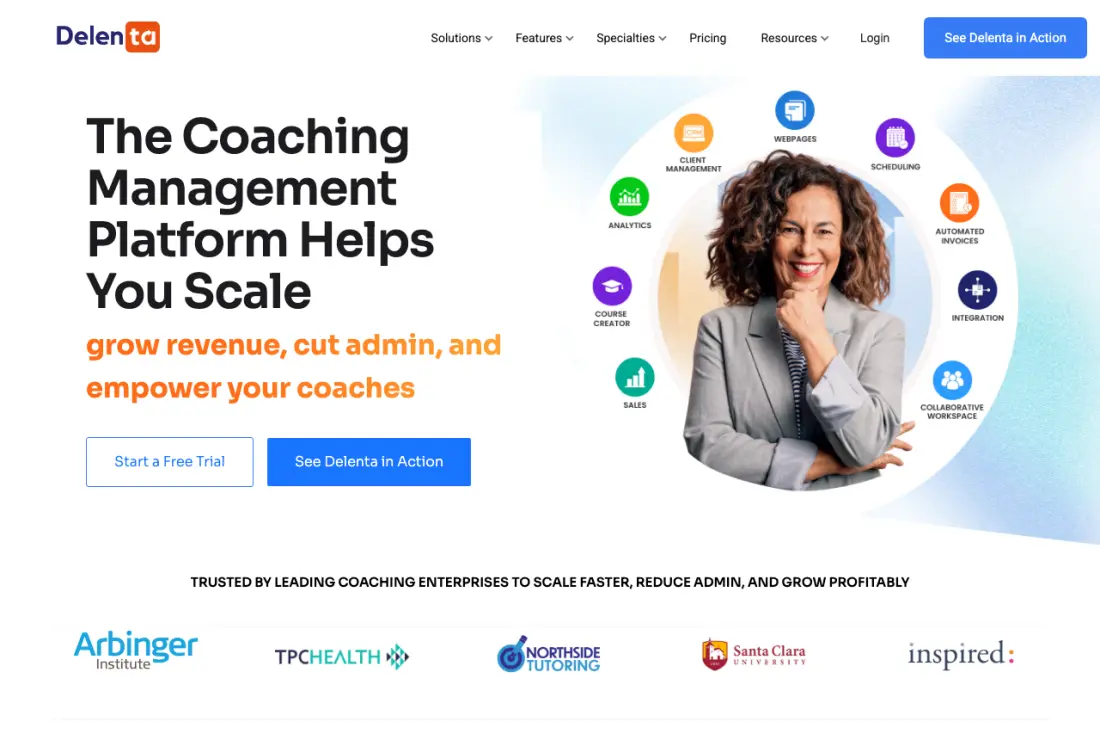
Delenta includes programme structure and video at $19, which makes small group delivery viable at a very low price.
Cohort support is partial and there is no community layer, so the peer element that makes group coaching work is missing.
Delenta home page · captured 22–23 September 2026
Best for
Small group delivery at the lowest possible cost.
Where it falls down
Partial cohorts and no community layer.
The three things a group programme needs
A cohort with a start and an end. Not a rolling membership — a defined group moving through defined material on a schedule, with progress visible per participant.
Somewhere they talk to each other. The peer element is most of why group coaching works. A cohort with no discussion space is a webinar series.
Group billing. Per-seat pricing, instalments, and ideally a waitlist for the next run. Selling twelve seats individually by invoice is how a profitable model becomes an administrative one.
Products generally supply one or two of the three, and the missing one becomes a second subscription with a separate participant list.
Cohorts, community and billing
Product
Price
Cohorts
Community
Group billing
Same records as 1:1
Coachfulours
from $29
Yes
Yes
Yes
Yes
Mighty Networks
$41
Best here
Strong
Yes
No
Skool & Circle
$99
Limited
Best here
Yes
No
Kajabi
$179
Partial
A module
Yes
No
Thinkific
$49
Yes
Course-attached
Yes
No
Delenta
$19
Partial
No
Partial
Yes
Comparison registry, verified May 2026. The final column is what determines whether the 20 to 30% conversion into one-to-one work is visible.
Photo by Matheus Bertelli on PexelsTwelve seats delivered in one weekly call, and a quarter of the room becomes one-to-one clients afterwards.
What actually goes wrong with group programmes
Filling it. The whole problem, and no software solves it. A cohort at half capacity costs the same delivery hours and produces half the revenue, half the peer dynamic and half the conversions.
Inventing it live. A programme designed in week one and delivered in week three is designed in front of twelve people. Build it from something you have already run one-to-one a dozen times; the curriculum is in your history.
Unbounded access. Twelve people with unlimited messaging is a different job from one person with it. Define the contact window in the package before somebody tests it.
Not tracking the conversion. A fifth to a third of participants will buy one-to-one afterwards, and most coaches never measure it, which means they never run the programme again for the right reason.
What a cohort needs that a course does not
A start date and an end date everyone shares
Per-participant progress, so you can see who is drifting
A space where participants talk to each other, not only to you
Per-seat billing with instalments and a waitlist for the next run
A link back to your one-to-one client list, so the conversion is visible
The economics of one cohort
$18,000Twelve seats at $1,500, delivered in one weekly call
~0Marginal cost of the thirteenth participant
20–30%Who buy one-to-one coaching afterwards
8–12Seats where the group dynamic actually works
Why a half-full cohort is worse than none
The delivery hours are identical. Six participants take the same weekly call, the same preparation and the same materials as twelve, for half the revenue.
The peer dynamic also fails below about six, and the peer dynamic is most of why group coaching produces better outcomes than the same content delivered one-to-one. A thin room is a worse product, not just a less profitable one.
And it is demoralising in a way that shows. Coaches deliver a half-full cohort with visibly less energy, participants notice, and the testimonials that would have filled the next run do not arrive.
Which is why pre-selling matters more here than anywhere: if eight people will not commit before it exists, running it anyway is the expensive choice.
Common questions
What is the best software for group coaching?
Against cohorts, community and group billing in one system, Coachful from $29 a month and we make it. Mighty Networks at $41 binds cohorts to community more tightly; Skool and Circle are better at community alone.
How many people should be in a coaching cohort?
Eight to twelve makes the economics work and the group dynamic function. Below six it feels thin and the peer element — which is most of why group coaching works — never appears.
How much do group programmes charge per seat?
$500 to $3,000 per participant depending on length and access. Twelve seats at $1,500 is $18,000 for a programme delivered in one weekly call.
Why do group programmes convert into one-to-one work?
Because participants have watched the coach work for twelve weeks rather than read about it. That is more exposure than any funnel manufactures, which is why the conversion runs at 20 to 30%.
What is the biggest risk with group coaching?
Not filling it. A half-full cohort costs the same delivery hours and produces half the revenue and half the conversions, and it is demoralising in a way that affects the delivery itself.
How much can a group coaching programme earn?
$500 to $3,000 per seat. Twelve seats at $1,500 is $18,000 for a programme delivered in one weekly call, and the marginal cost of the thirteenth participant is effectively zero.
How do I fill a cohort?
Pre-sell before building it. If it does not sell you have saved forty hours; if it does, you build it with real participants telling you what they need next week. Running it twice a year rather than continuously keeps filling it a campaign rather than a permanent task.
What happens if my cohort does not fill?
The delivery hours stay the same and the revenue halves, the peer dynamic fails below about six people, and the testimonials that would have filled the next run do not arrive. Pre-selling before building is the way to avoid finding out.
The verdict
Mighty Networks binds cohorts to community more tightly than we do, and Skool and Circle run a better community outright. On the group experience alone, either is a defensible choice.
Coachful wins the stated criterion because the participants stay on the same client list as your one-to-one work, and that is where the 20 to 30% conversion lives. Split across two products, the most valuable output of a group programme is the one you cannot see.
How to disagree with this
The criterion is the whole argument. If breadth is not what you need, this order is irrelevant to you and a different list will serve you better. That is why there are several, each ordered by something different.
For a version of the same products with no ordering at all, the alphabetical directory lists every one of them and picks nothing.
Published by Coachful, which makes one of the products ranked here. No affiliate links and no paid placement.